


The Rise of the “Material Wife”
Feminism is a movement. A struggle towards liberation and systemic change. Of course, there’s ebb and flow in this process. Now, we're in the digital era where the internet is supposedly a tool for progress, social media continuously package women in bite-sized aesthetics of “soft life” women, “material wives,” and other portrayals that appear to be choices.
I have seen this TikTok video of a man about “3 Signs She’s Wifey Material.” There goes a list of 1) buying things for a man even if she can’t afford it, 2) giving updates about her life without being asked, and 3) introducing a man to her family.
Women are being boxed into checklists designed to prove loyalty, selflessness, and suitability for men.
There’s a dangerous romance being woven around traditional gender roles, and the internet is helping normalize it. These narratives present women staying home, caring for the house and children, or performing constant emotional labor as empowered, while subtly reinforcing the age-old notion that men’s worth comes from dominance, provision, and self-sacrifice.
The internet may not directly dictate patriarchy, but it sure amplifies it. Men continue to absorb these messages, often unconsciously, carrying forward beliefs that keep patriarchal structures deeply rooted in society. Feminism, in its truest sense, doesn’t exist to teach men; it exists to liberate women. The lessons men gain are incidental. These are glimpses of a better world we might imagine and not a roadmap for our own redemption.

Seeing Patriarchy for What It Is
Once you start recognizing patriarchy for what it is, it becomes impossible not to see it everywhere. Men do receive certain privileges, but that’s not to say we have it easy. Most men don’t. The system reserves its richest rewards for those already at the top: business owners, executives, and people who wield influence. Meanwhile, working-class men are fed a story: the proud, noble provider who sacrifices everything for his family, the tireless worker who refuses to let feelings interfere with labor, the aggressive competitor who bulldozes his way up the hierarchy.
These narratives glorify exhaustion, emotional suppression, and aggression. They tell men that self-worth is tied to **********, income, and the ability to outpace peers. Patriarchy thrives because it convinces men that this performance is honorable, when in reality it often comes at the cost of mental health, emotional connection, and personal freedom.
The Emotional Toll of Masculinity
We are encouraged to believe that being tough, aggressive, and unfeeling is honorable. Mental health is a non-issue; vulnerability is weakness; competition is survival. And while the system gives men fleeting pride and status, it extracts emotional labor that is often outsourced to women, from our mothers, wives, and sisters, who quietly absorb the psychological burdens we carry. These invisible sacrifices keep the system running smoothly. Women’s labor in emotional, domestic, and physical aspects are essential to maintaining the image of male selflessness and nobility, yet it is rarely recognized. Feminism challenges this, refusing to let women’s labor be invisible and subservience be romanticized.
How the Internet Trains Men to Perform
Social media reinforces these lessons in subtle ways. Viral memes about “real men,” TikToks celebrating alpha competitiveness, lifestyle blogs romanticizing material provision. They all suggest that a man’s value lies in his control over women, finances, and reputation. Even when framed as empowerment, these messages rarely challenge the system; they reinforce it, making it feel aspirational rather than oppressive.
The TikTok “wifey material” lists, for instance, turn women into performers. A woman is valued for sacrifice, emotional labor, and symbolic gestures that serve a man’s ego. Her autonomy is irrelevant; her worth is defined by how well she fulfills a checklist. And the men watching? We absorb these messages and internalize them as truths about what women should do and what men deserve.
Imagining a Better Way
And yet, feminism offered us a different perspective. It didn’t make us feel guilty. It didn’t give us a checklist for self-improvement. It allowed us to imagine something better. I began to ask questions: What if our wives didn’t have to shoulder the emotional labor of the issues we bury during work hours? What if we didn’t have to compete at every turn or prove ourselves through aggression and dominance? What if worth could be measured by care, collaboration, and emotional honesty rather than income, rank, or violence?
What if we could take pride in accomplishments without tearing others down? What if men were allowed to be both workers and fathers, ambitious but compassionate? These questions should influence how we see ourselves, our relationships, and society.
Feminism Is Not Here to Save Men
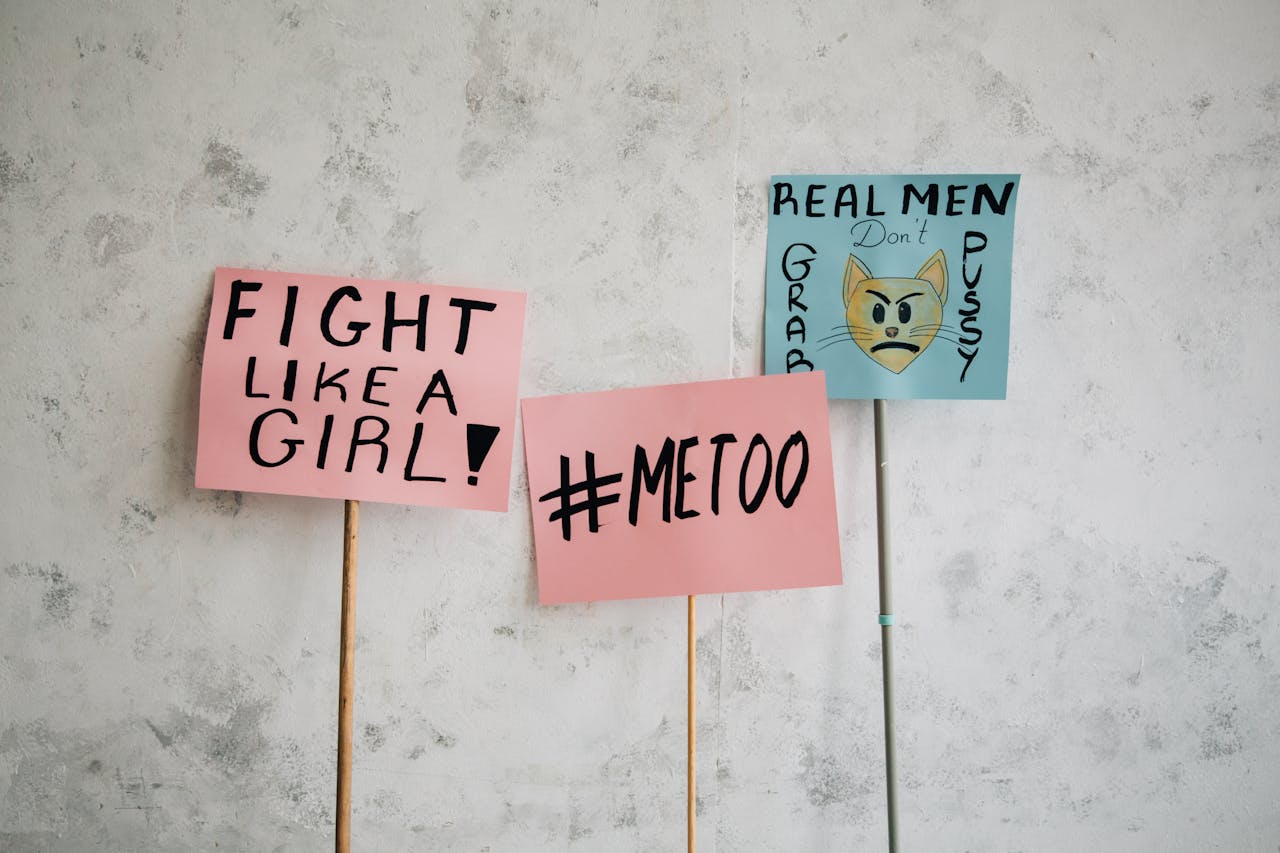
Feminism is the liberation for the comfort for men. Feminism is systemic justice for women. The benefits men like less pressure to compete, freedom to express emotions, a healthier definition of masculinity are secondary. They are side effects of a more equitable society. Women should not be forced into subservience, unpaid emotional labor, or domestic captivity, regardless of whether a man gains some fleeting sense of relief. Feminism refuses to make women’s labor invisible, refuses to normalize their dependence, and refuses to romanticize roles that limit their potential.
Listening as Strength
Recognizing patriarchy also made us realize how much of masculinity is performative. In workplaces, social spaces, even online forums, men are rewarded for presenting an image of toughness, confidence, and self-reliance. Vulnerability is punished, curiosity is dismissed, and silence is perceived as weakness. The internet amplifies this performative aspect. Debate threads reward aggression, comment sections reward certainty, and viral content celebrates assertiveness over introspection.
Listening, really listening, is devalued. And yet, feminism taught us that listening, not performing, is a form of strength. Real growth doesn’t come from being louder or more confident; it comes from being present, patient, and attentive.
Imagining Liberation
The internet taught men about what it means to be a man. But emotional literacy is not a weakness. Acknowledging feelings doesn’t diminish one’s identity, but it expands it. Aggression and competition are not the only paths to respect. Self-worth doesn’t have to come from ********** or income.
The more we listen, the more we will notice the cumulative harm patriarchy caused, not just to women, but to men too.
Men still carry privilege, and we still benefit from structures that oppress others. Recognizing that doesn’t make us victims; it makes us accountable observers. It allows us to question myths we’ve internalized: that wealth or aggression equals honor, that sacrifice without recognition is noble, that women’s labor is invisible and expected. It also allows us to imagine alternative realities, where equality is measured by care, collaboration, and mutual respect, rather than dominance or submission.
The Vision Feminism Offers
In this sense, feminism helped us imagine a better world. I stopped glorifying aggression and control. I started thinking about the systems we uphold and the ways we can change them to make life more equitable for women. I realized that liberation doesn’t depend on us; it depends on women being free to define their lives, careers, and relationships on their own terms. Men may benefit from this liberation indirectly, but that’s not the point. The point is structural justice, redistribution of emotional and domestic labor, and recognition of women as equals.
The internet and its twisted forms of feminism will continue to circulate glossy images of “material wives” and “traditional lifestyles,” embedding patriarchal values in new packaging. Men will continue to absorb these messages, sometimes unconsciously, sometimes with a quiet, troubling satisfaction. But true feminism is a reminder that the goal isn’t to re-educate men or make life easier for us. It’s to liberate women. And once women are free, men, along with everyone else, may finally be able to see that there is a different, healthier, and more human way to exist.
Conclusion
Feminism helps us to see the structures that shape our lives and allows us to imagine a life that isn’t dictated by aggression, **********, or the expectation of sacrifice. I can choose to listen, to care, to step back, and to share responsibility. I can choose to see women as partners, not props. I can imagine a world where we don’t need to perform endlessly to prove our worth, and where equality is not just a slogan, but a lived reality.
Because at the end of the day, the internet taught us how to be seen. Feminism taught us how to see. And that vision is what makes liberation possible.
