


The Workplace Isn't Evolving- It's Being Rebuilt
There was a time when working meant getting ready in the morning, travelling to the same workplace, spending eight or nine hours there, and coming home when the workday was over.
This view seems quite alien nowadays.Technology has transformed the way people interact, work, and get things done, along with changes in employees’ mindsets and behavior. One of the crucial turning points is brought about by AI.
Labor that earlier took much longer can now be completed without delay. These transformations are unlikely to slow down. In the future, new technologies will emerge, the ways of doing business in companies will change, and their employees will have to adapt.
Businesses have started thinking about evolving ways of doing work, the skills necessary to perform it, and the ability of various workers to adapt to these changes. Five recent trends can help us understand how work will be done in the future.
The Rise of the Agent Workforce: AI Moves From Tool to Worker
Artificial intelligence isn’t just relevant to the technology field anymore. It has now penetrated various sectors.
It can assist anyone with creating reports, summarizing texts, interpreting data and making conclusions, or taking care of mundane jobs. Even if AI isn’t a part of your job description, it looks good on a resume to know how to use it if there is a need.
Imagine yourself trying to find one project in a huge file. Chances are high that using AI will be significantly easier and quicker, leaving you with more time for creative and analytical work. That is why organizations are eager to embrace this trend. Each company strives for efficiency and competitiveness.
Add Image
From AI Tools to a Second Workforce
AI agents are being developed to carry out sequences of tasks and workflows with less direct human instruction. Instead of helping with one task, an agent could take responsibility for an entire process. Microsoft’s 2025 Work Trend Index describes the rise of “human-agent teams” and Frontier Firms, where organizations organize work around intelligence available when it is needed. This doesn’t necessarily mean replacing entire teams. An employee might make a judgment call while an agent handles research, while an agent completes a routine workflow for review.
The Governance Gap
The difficulty is not just in employing an AI system. Organizations also need to establish the purpose this system will serve.
Once AI starts working on its own, several things arise that need to be taken into consideration, including permissions, human control over the work of AI system, quality, price, and accountability. According to Gartner, there will be a surge in the number of enterprise solutions that have task-specific AI systems by 2026. It has also pointed out that 40% of all AI projects may be cancelled by 2027 due to obscured profits, increasing costs, and governance challenges.
The introduction of AI is accelerating. The companies that are successful in making the most of this technology may be those that take a responsible approach towards the new developments.
The End of “Going to Work”: Work Becomes Portable
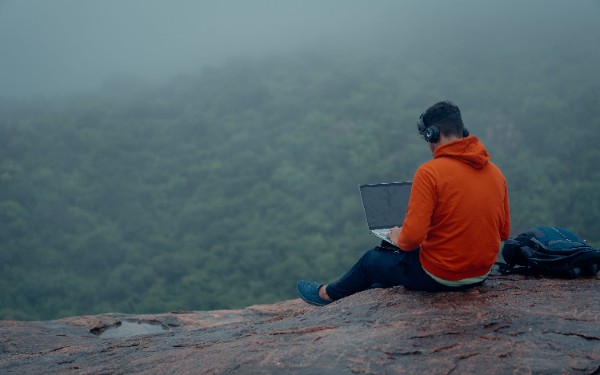
Another trend that is growing fast is “work from anywhere." Nowadays, work is no longer limited to a specific place for many individuals.
This became clear during the COVID-19 pandemic, when individuals had to work from home due to the situation. It became mandatory and redefined the whole work culture.
Now more and more people want to adopt this trend and find it flexible. They look for opportunities according to their skills that give them more space and make office-going just an option. All an individual needs is a computer and internet to work from home, a cafe, coworking spaces, or even another city. They want to be productive but on their own terms. They do not want to feel guilty at work for not being productive, even when they are doing everything they are assigned to do.
From Work From Home to Work From Anywhere
For suitable roles, you may work from another city without putting your career on hold. Offices aren't disappearing. Their purpose is changing. If employees can complete focused work from almost anywhere, offices need to offer something worth coming in for. That could mean spaces for collaboration, creative work, meetings, social interaction, or simply a change of environment. Work is becoming something you carry, rather than somewhere you necessarily go.
A Generational Shift Is Redefining the Employee-Employer Relationship
The workforce today does not view jobs in the same light as past generations. Much of the workforce today is made up of millennials, while Gen Z continues to join. All the development in communications, technology, economics, etc. has affected the expectations of these generations towards their jobs.
This doesn’t mean that some generations have a better work ethic than others; people work under different conditions in different periods. Younger workers want flexibility, autonomy, development, and well-defined limits at work. They’re much more willing to express their discontent with working beyond working hours or leaving if the corporate culture is not the right one.
Employee Well-Being Is Part of the Conversation
Increasingly more people are willing to be a part of those companies that pay attention to their well-being as well. Now people are more likely to leave the place that causes mental load and high-functioning burnout.
They are looking for more flexibility and a motivational atmosphere to contribute not just to the company's growth but also to their personal growth as well. Salaries are still important, but employees are also assessing their whole working experience and not just money.
Workplace Culture Is Becoming Public
Social media hasn’t just changed how people communicate. It has changed how they understand work. Employees can see what people in their industry are doing, how other companies operate, and what their peers consider acceptable. That creates awareness. Someone unhappy with their work culture can see that another workplace offers more flexibility. LinkedIn, Instagram, TikTok, Reddit, and other platforms have made these conversations more visible.
The LinkedIn and Instagram Effect
People discuss burnout, salaries, layoffs, managers, return-to-office policies, boundaries, and career growth. They also share what their companies are getting right. LinkedIn is no longer just a place to post your résumé or search for jobs. It’s a space where people discuss careers, leadership, workplace experiences, and professional expectations.
For companies, this creates a different kind of visibility. They can shape their employer branding, but they can’t completely control what employees say. For workers, that visibility can be useful. It helps you understand what’s happening outside your workplace and decide what matters to you. Workplace culture is no longer experienced in isolation. Employees compare it with what they see elsewhere.
Adaptability Is Becoming the New Career Currency
Technology now touches almost every part of professional life. As those tools change, jobs change with them. AI may automate particular tasks without eliminating an entire profession. A marketer might use AI for research, while an accountant could automate parts of reporting. The job remains, but the way you do it changes. Knowing one fixed process may no longer be enough. You’ll need to learn new systems, understand new tools, and adjust when your responsibilities change.
Future Skills and Lifelong Learning
The significance of digital skills will keep rising but technology is not likely to make human judgment redundant. In situations when technology offers solutions that require evaluation, crucial skills such as critical thinking, communication, creativity, decision-making, and problem-solving come in handy.
This will increase the necessity of lifelong learning since previous skills might not always work.
The Rise of Data-Driven HR
This shift also affects HR. Companies increasingly have data that can help them understand workforce needs, skills, performance, and employee development.
HR teams can use it for hiring, training, and workforce planning. As work becomes more technology-driven, understanding people through data can become as important as understanding the technology.
The Future of Employment Will Be Less Fixed
Workplace trends will come and go. New technologies will appear, companies will experiment with different ways of working, and some practices will disappear.
But one thing is unlikely to change: you’ll need to keep adapting. AI is changing who can perform certain kinds of work. Flexible arrangements are changing where work can happen. Millennials and Gen Z are changing what employees expect. Social media allows individuals to know more about what is going on outside their companies. This means that businesses will have to learn how to adapt to these changes in order to remain competitive, while employees will have to acquire and develop new skills.
The workplace of the future won’t arrive as one dramatic shift. It’ll take shape through smaller changes in how people work, where they work, what they expect, and what employers ask of them. The real advantage may not be knowing what the next workplace trend will be. It may be being ready when it arrives.
Add Image
