


There is a weird discomfort that sneaks in when the pace of life begins to slow and life becomes less hectic . The meetings suddenly drop off, and you don’t have to chase deadlines. There are all these empty spaces around you. Instead of relief, though, what settles in is unease. Rest begins to feel suspicious. Almost like you never earned it.
This nagging feeling has a name: productivity guilt. Even if we don’t always say it out loud, it is there. And after a career pause, it hits harder than expected.
What Exactly Is a “Productivity Hangover”?
A productivity hangover is the mental discomfort that lingers when constant busyness suddenly stops and the mind struggles to adjust the stillness. Think of it like the after-effect of being constantly switched on. It is like your life gets built around outputs. You had structured days lined up with meetings, deadlines, or deliverables. Your time had a clear purpose, and your value often felt tied to how much you could produce.The productivity was always measured on how quickly you responded to complete a task. When that structure disappears, rest can feel unfamiliar rather than relaxing.
When Routine Disappears, but Mind Does Not
A career pause often arrives before the mind is ready for it. Perhaps you stepped away by choice, or life forced you to. Either way, the rhythm breaks. Yet the mind does not immediately catch up. The reflex is still present; you awaken itching to accomplish something grandiose or significant. When nothing needs your attention, the silence feels almost menacing, and you get the sense that you have an obligation to accomplish something significant. That discomfort is the hangover. What lingers is not just the absence of work, but the loss of identity built around it.
Rest: When It Feels Like a Problem
Rest is supposed to feel good, right? Because finally, there is time to breathe. You can sleep without alarms. You can just exist without always being “switched on.” But there is some reason why it feels wrong.
You look at LinkedIn, watching others advance, launch their project, or pursue the next big idea. Even the topics discussed with friends are centered on their projects and progress. Meanwhile, you are on a pause.
That contrast creates tension, and it gets under your skin. It quietly plants a thought: Am I falling behind? And suddenly, rest no longer feels restful. It feels like you are stuck while everyone else moves forward.
The Conditioning: Where This All Comes From
A lot of this comes from how we have been conditioned. From a young age, productivity is praised, and being busy is seen as admirable. Whereas doing nothing is often labeled as laziness. Over time, that belief settles deep. You begin to equate your worth with your output. The more you do, the more valuable you feel. The moment you stop working, that sense of worth becomes shaky.
Even when you logically know that rest is necessary, emotionally it would not land the same way. At some point, rest stops meaning “neutral” and starts becoming something you have to deserve.
Identity and The Fear of Losing Your Edge
For a lot of people, work is not just how you pay the bills. It becomes a core part of your identity. Whether you are the dependable one or the one who gets things done. That identity feels solid when you are actively working.
A career pause disrupts all this. The loss of the routine, recognition and sense of purpose that work often provides can leave you questioning yourself. Am I still ambitious, still sharp? Maybe you do not say those questions out loud. They just hum in the background, making downtime feel strangely risky. Taking rest, in this context, begins to feel risky.
Hustle Culture's Non-Stop Pressure
We also can not ignore the environment we live in. Hustle culture keeps us thinking about doing something productive. There is always another certificate to earn, another skill to click “add” on, one more milestone to chase.
Social media is one of the biggest factors that amplifies this pressure. You are only exposed to people’s wins, new projects, and progress. No one posts about their quiet moments or longer pauses. You cannot help but compare, and comparison almost always makes you feel as though you are falling behind.
This creates a distorted baseline. It makes stillness look like failure, even when it is not. So when you take a break, it becomes pressure to perform. The trap of trying to make rest “productive.”
The Paradox of “Productive Rest.”

Interestingly, even rest gets pulled into the productivity cycle. You start feeling like your break should also serve a purpose. You even start trying to optimize your downtime. “If I’m not working, maybe I should learn something new! Set some self-improvement goals and take this break.
On the surface, that seems harmless. Growth is good, after all. But beneath it, there is often the same pressure. The same need to justify your time. You are not really resting, but just shifting the form of productivity.
True rest, the kind that allows your mind to slow down, becomes harder to access.
Burnout Has Not Left the Building
Another layer to this is burnout. Many career pauses happen because something feels unsustainable. You were exhausted, drained, or mentally stretched thin.
Taking a break is supposed to help. Except that burnout does not dissolve on command. Even when your calendar clears, your nerves might still be fried. Maybe you feel jumpy or struggle to relax. That restlessness can be mistaken for guilt. Or it can amplify it. You think you should feel better by now and wonder why you are not enjoying the break the way you expected. The truth is, recovery takes time. More time than we often allow.
The Quiet Role of Privilege and Pressure
There is another layer here, quietly at work; the awareness that you are lucky to be able to pause at all. Not everybody has that choice. The awareness can also turn into pressure. You start feeling like you are wasting an opportunity if you are not using this time “well.” Instead of resting, you try to justify the pause to prove that it has value.
Practical Ways to Ease Productivity Guilt
Productivity guilt rarely disappears through one big realization. It usually softens through small and repeated actions. One of the most helpful steps is creating gentle structure instead of forcing intense routines. It can include waking up at a consistent time, taking a walk, or finishing one meaningful task each day without pressure.
It also helps to widen your definition of progress. Progress is not limited to visible output but resting, recovering, learning, reflecting, or making thoughtful decisions are also forms of movement. When progress is defined more broadly, guilt begins to lose its grip.
Reducing unnecessary comparison matters too. The constant exposure to other people’s milestones can distort your sense of timing. Spending less time on social media, or being more selective about what you consume, can create mental space.
You should importantly speak to yourself with more fairness. A career pause does not erase your ability, ambition or value. It is a phase of life, not proof that you are falling behind.
Redefining What “Enough” Looks Like
One of the hardest things about shaking off productivity guilt is changing your whole idea of “enough.”
If you have always connected the worth to output, then slowing down feels uncomfortable. Like you are tearing up the script you have lived by.
It is not a temporary solution because it requires hard work. There will be times when you need to observe those thoughts that emerge during moments of downtime. You will be overwhelmed with guilt, fear of being idle, and the drive to fill that void with activity.
Allowing Rest to Exist Without Justification
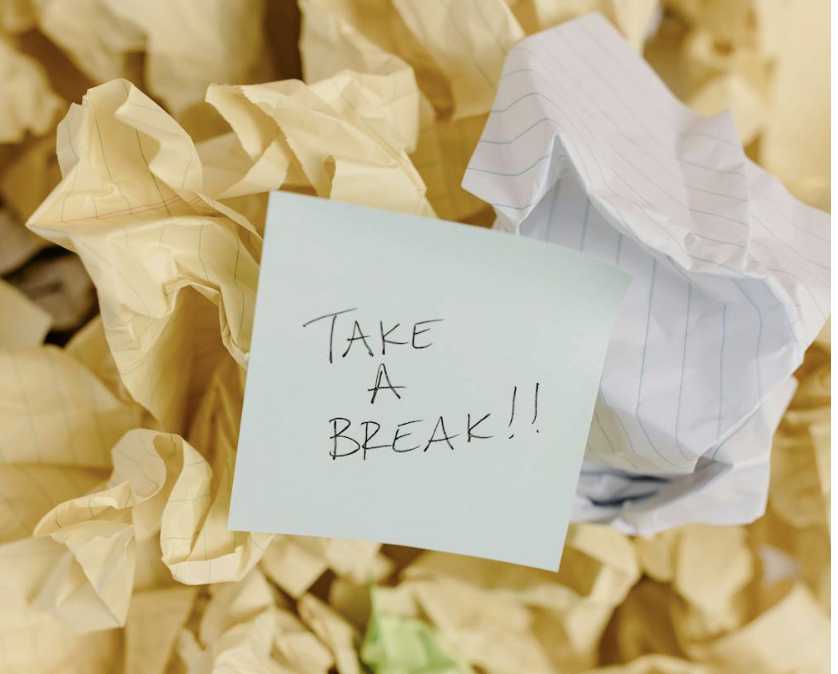
There is a certain freedom in allowing rest to be just rest. It is not a means to an end or a strategy. It is not something that needs to be earned. Instead, it should exist as a natural state of being. Because without real rest, you are just pausing for a while and not recharging.
Moving Forward Without Rushing
Eventually, the pause will end one day, and you will return to work or move toward something new. When that happens, the goal is not to abandon productivity. The goal is to relate to it differently.
You start to see productivity as a tool, not as a measure of your worth. You learn to value stillness alongside action.
There will still be days when guilt shows up. That doesn’t disappear completely. But it loses its authority. It stops dictating your choices.
In that space, the whole system shifts. Work becomes more intentional, and rest becomes more genuine.
“The hangover fades, slowly but surely.”
