


Introduction
The first time I heard someone say, “consent is so confusing these days,” it wasn’t during a debate, a courtroom argument, or even a heated exchange in some comment section. It was said casually—almost lazily, without an afterthought— over a cup of chai. The speaker of this statement was a friend from college, who is now an associate at a well-reputed legal firm. His tone wasn’t defensive; it was dismissive. Unabashedly, he continued to theorize how “consent” had suddenly become an abstract riddle that society invented to make ordinary interactions unnecessarily complicated.
The sentence, and his theory, stayed with me. It was not because it was shocking, but because it was familiar. On my walk home, I thought about all the different versions of it that I’ve heard: “she gave mixed signals,” “intentions were misunderstood,” or the most popular, “things used to easier before”. On that train of thought, I travelled to several stations: consideration, social interpretation, introspection, and conclusion.
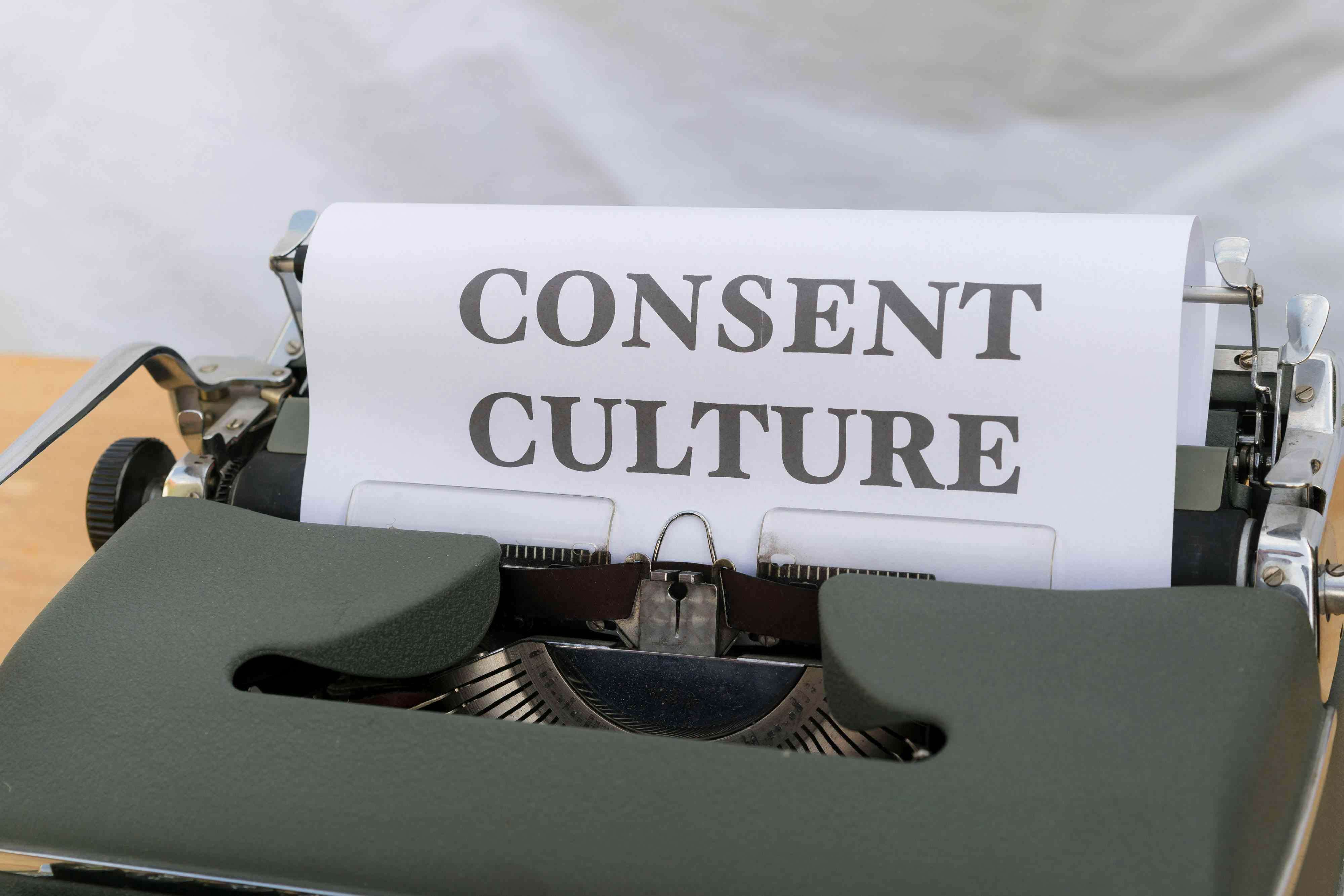
Picture credit: Pexel
Consideration
Of course, things were less complicated when gender and power dynamics decided who had autonomy on themselves and who did not. Back in the “old days”, consent withered in the presence of power imbalance. Women were treated as property to be passed off from one man (the father) to another (the husband) and men from economically struggling backgrounds were easy targets of wealthy men’s amusement.
Literature stands as a memoir to this disbalance that never allowed “consent” to become a vocalized issue. Several pieces of fiction garb realities of “old days” into stories that haunt its readers. Be it Celie, for The Color Purple by Alice Walker, who was repeatedly subjected to non-consensual sexual acts by a man who she believed was her father. Or be it Giovanni, in Giovanni’s Room by James Baldwin, whose bodily autonomy was casually violated by his employer. Both these stories do not outline, or even touch on the subject of, consent. They simply show how individuals who could provide bed and bread felt entitled to the bodies of those who feared starvation.
In the “golden old days”, consent was rare but entitlement was ample.
Today, the situation is deemed as “complicated” because access to someone’s autonomy is not easy; it depends on the named, and legally defined, element of consent. Laws across the world have listed down all the scenarios where a person’s, “yes,” did not equate itself to the grant of such access. The legal standard for consent is presence of an unequivocal voluntary agreement. In other words, consent is not the absence of resistance, not silence, not submission born out of fear or pressure.
There is nothing ambiguous about that standard. Yet, confusion conveniently appears when entitlement enters the room.

Picture credit: Pexel
Social Interpretation
“Dil me haan hai, honthon par naa” (Her heart says yes, but her lips say no)
Entitlement assumes access over bodies, emotional labor, or even attention. It thrives on proximity: friendship mistaken for permission, familiarity confused with ownership, persistence reframed as romance.
There are ample iconic movies that romanticize the refusal that “wasn’t really a refusal”. From classics where the heroine’s resistance is prelude to inevitable surrender to modern pop narratives where persistence is portrayed as proof of sincerity, we have normalized the idea that consent is negotiable. Consider how often male protagonists are celebrated for not taking no for an answer. The audience is trained to wait for the turning point— the moment when female lead realizes how much he loves her and her resistance melts into affection. Rarely does any movie, or tele-series, highlight whether the transformation was desire or exhaustion.
In real life, the consequences are far less poetic.
Social media, and news channels, are flooded with cases where consent is dissected into considerations of “what she wore?”, “why she went there?”, “why she stayed?”, and “why didn’t she leave sooner”. Survivors are asked to prove non-consent, while entitlement perpetrators sit back and enjoy the misuse of “innocent until proven guilty”.
Introspection
“When access is assumed rather than requested, any boundary feels like an obstacle”
Consent becomes confusing only when it interrupts entitlement. In such moments, clarity is no longer convenient and, therefore, is easily replaced by ambiguity. There is a telling asymmetry here. People who respect consent rarely complain about confusion. They accept withdrawal without theatrics. The curious case of confusing consent is the narrative of those who expected continuity without confirmation.
This phenomenon exists even beyond sexual relationships.
Consent governs conversations, professional spaces, creative work, and digital presence. Whose stories get told? Whose image is shared? Whose silence is interpreted as agreement? In the era of screenshots, deepfakes, and algorithmic amplification, the stakes have expanded because there is more access. However, the core of consent remains unchanged: access does not mean permission.
Complication on this subject stems from discomfort. Accepting that consent is a non-negotiable ethic requires confronting the possibility that what one desired was never owed. This realization is unsettling in cultures that condition people to see persistence as virtue and rejection as challenge.

Add Image
Picture credit: Pexel
Conclusion
Consent is just a word. ‘No’ is just a word. But entitlement— well, that’s an inherited heirloom. The mindset that all desires can be fulfilled if you’re powerful enough is often passed down generations after generations.
Often, the public discourse around sexual violence focuses on sex. But non-consensual sexual acts are not about sex; they are about power. The words of feminist writers, such as Susan Brownmiller and Audre Lorde, have always emphasized who consent is not merely a personal interaction but a political one— one that reflects whose autonomy is respected and whose is routinely questioned.
The discomfort many feel around consent discussions is not because rules are unclear. It is because rules are finally being enforced socially, not just legally. The expectation has now shifted from “Can I get away with it?” to “Do I have the right to ask at all?”
Perhaps the most ordinary thing about consent is how ordinary it is. It does not ask for grand gestures; just attentiveness. It demands humility. It demands the willingness to hear “no” without rewriting it into something softer for one’s own comfort.
Consent is not confusing. On the other hand, entitlement is deeply invested in staying misunderstood.
Why? Because once we name it, clearly and collectively, the confusion disappears— and with it, the excuse.
