


H2: Introduction
Feminism as a movement did not begin as content. It was not meant to be beautiful, sell like hotcakes, or be easily accepted. It was confrontational by nature and intended to shake up power structures, not to co-exist comfortably with them. Feminism endorsed the right to vote and has therefore fought throughout history as a challenge to prevailing political, economic, and social systems. However, in the current era characterized by influencers, feminism is increasingly framed as a personal lifestyle choice instead of a radical struggle for rights. What was once a source of huge controversy has been opened up to the public, and this shift in feminism’s visibility should alarm us.
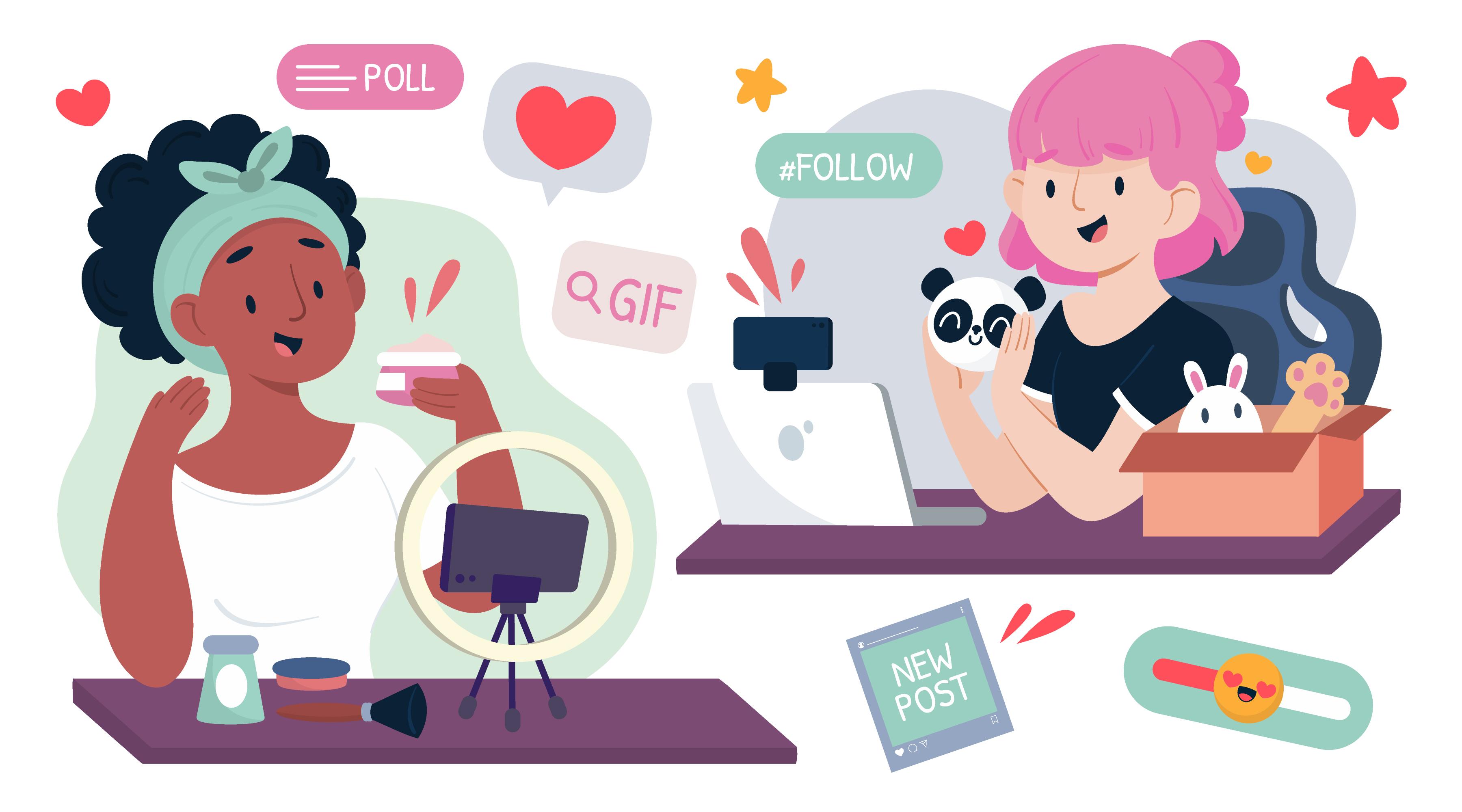
This conversion process is not accidental and is executed very strategically. Influencer culture is built heavily on relatability, aspirational living, and brand alignment. These values clash directly with those of a resistance movement, which becomes a major drawback once feminism enters the influencer economy. As a result, women's and girls’ issues are often diluted because they must conform to the rules set by algorithms and advertisers.
Source: Freepik
H2: From Movement to Marketable Identity
Social media has revolutionized feminism and made it something that can be worn and sold easily. Empowerment slogans are neatly placed in between affiliate links. “Strong woman” captions go along with luxury hauls. Feminism becomes an online identity one performs, not a commitment one keeps offline.
The extent of this commodification is huge. The global influencer marketing industry reached $20 billion in 2023, according to industry reports; lifestyle and self-improvement content were the most profitable categories. Feminist words: empowerment, independence, and confidence have been the top sellers in this economy. Mega companies have started to sell feminist products, e.g. T-shirts and skincare, without discussing gender pay gaps, labour exploitation, or workplace discrimination in their supply chains.
This version of feminism is all about being seen, not being held accountable. It is those who can confidently and loudly talk about empowerment while remaining in systems that create inequality who will benefit from this movement. The outcome is a movement that is very loud but, at the same time, does not say much.
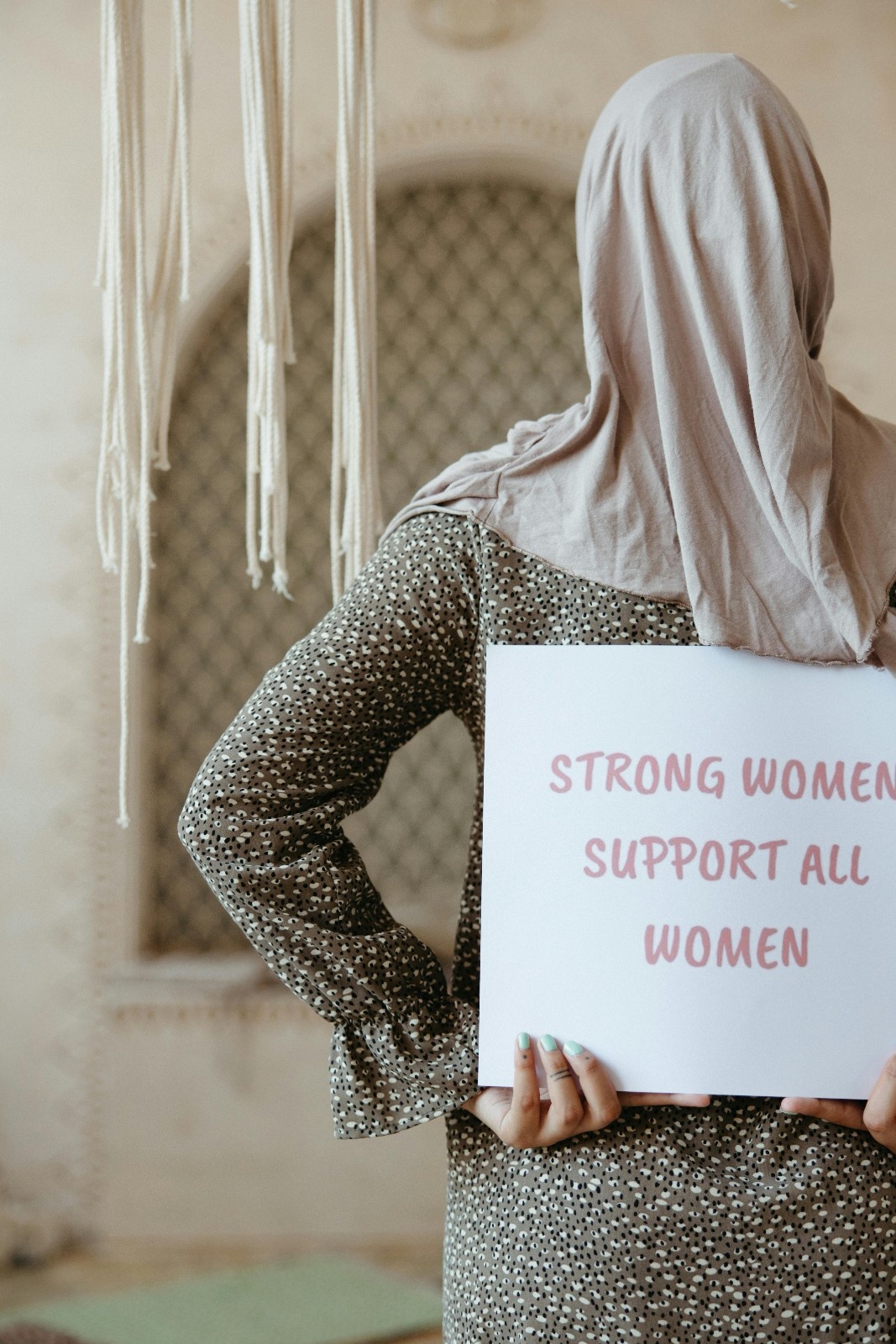
Feminism is not a lifestyle nor a ready-made identity. It is a political commitment. When feminism is merely about aesthetics, that commitment is lost.
Source: Pexels
H2: Empowerment Without Resistance
Influencer feminism commonly highlights the singular woman, her self-esteem, her achievements, her mentality, and so on. Personal development is important, but feminism was never meant to be restricted to mere self-approval. Compassion cannot solely eradicate the pain of structural oppression.
It is repeatedly shown by studies that the driving force behind gender inequality is systemic barriers and not individual shortcomings. The World Economic Forum's Global Gender Gap Report recognizes that, at the current rate, gender parity will never be achieved for over 100 years. “No matter how many positive affirmations we practice, wage gaps can't be bridged, unpaid care roles can't be shed, and reproductive rights can't be secured.”
There is only a very thin line between feminism, which is reduced to working harder, charging more, or being confident and quietly positioning itself in line with neoliberal ideology that rejects the existence of systemic injustice and puts responsibility for overcoming such injustice solely on individuals. Feminism does not overthrow patriarchy by teaching women how to be more graceful survivors. It does this by challenging the existence of the system.
As Audre Lorde so aptly phrased, “The master's tools will never dismantle the master's house.” Women living well within oppressive systems, without the systems being undone, is not liberation. It is an adaptation.

Source: Pexels
H2: The Silence That Speaks Loudest
One of the most harmful factors of influencer feminism is, most probably, selective silence. The majority of influencers declare their opinions, their boldest ones, when the topics are either trendy or safe. However, they back off once the political talks turn inflammatory or reach a point where they become inconvenient. Matters of worker exploitation, the issues of caste and racial inequalities, gender based violence are some of the subjects the influencers choose not to engage with because of the risks of alienating the brands or the audience.
The consequences of this silence can be measured. Research on social media activism indicates that while online awareness can result in engagement, it is still unable to bring about policy changes or to cause sustaining movements when it is not supported by real-world organizing. The silence maintained by the high-profile individuals causes the public to become accustomed to ignorance, especially those who regard influencers as their moral guides.
Silence is not a neutral act, as feminist scholars have claimed for a long time. If those with considerable influence prefer to be silent instead of confronting the issues, they are effectively reinforcing the same power imbalances that feminism is trying to eliminate. The very thought of Angela Davis comes to mind: “In a racist society, it is not enough to be non-racist. We must be anti-racist.” The same can be said concerning feminism: neutrality sustains inequality.
H2: Feminism That Leaves Too Many Behind
Mainstream influencer feminism does not just discriminate against less fortunate women; it favours women who already possess social, economic, and cultural capital more frequently. Only the most organized, inspirational, or emotionally appealing stories are accepted from the marginalized group. The term intersectionality is more often turned into a buzzword than a practice.
The issue of erasure, which is a major drawback of women’s plight, was the very reason why Kimberlé Crenshaw first developed the term intersectionality to show how different systems of oppression intersect and become more severe. But influencer feminism often simplifies this issue, showing only the experiences that are most similar to those of the general public and advertisers as the ones worth telling.
A feminist ideology that overlooks class, race, caste, disability, and access is not incomplete; rather, it is misleading. The kind of freedom that only benefits a small group is not freedom at all. As feminist movements in the Global South have very often pointed out, feminism that avoids economic exploitation and social hierarchy cannot be able to be liberated but will instead be elitist.
H2: Influence Is Not the Enemy, Dilution Is
Not all social media influencers can be said to be contributing to this degradation. There exist some who make use of their influence genuinely, referencing their own privilege while crediting their sources and pointing their followers towards grassroots organizations and bringing to the forefront the voices that exist in obscurity.
The problem lies in the digital culture that values likability over truth, and more so, branding over bravery. It is more preferable for algorithms to reward content that is more easily digested or affirmative, as opposed to content that works to uproot entrenched structures of power. If feminism is reduced to this, it risks undermining feminism’s challenge of power.
H2: Feminism Must Remain Uncomfortable
Feminism is not intended to make everyone happy. Feminism is intended to disrupt, challenge, and demand change – sometimes at the cost of followers, sometimes at the cost of sponsorships, sometimes at the cost of approval.
A liberation movement cannot begin to prioritize comfort above all else.
If feminism is to make it through the influencer age, it has to resist being content. It has to be political, collective, and obstreperous. This, after all, was never the point of feminism: to be viral. To be marketable.
The goal was always to be free.
