


To many people, Technology Readiness Level still sounds like a modern concept, but before it was introduced, people never looked at technology and invention in the same way. For example, in the 1800s, Samuel Fay was exhausted and annoyed, looking for something that could attach claim tickets to fabric; the pins would pierce and tear the fabric. And in that very moment, he came across a piece of wire that bent in the shape of an X and slid the ticket and the fabric) right into the middle. That’s it. That’s the earliest and simplest version of what you have dozens of today in your office, at your home: a paperclip.
But that’s not how technology works today; neither did it work this way back then, to be honest. This brings Technology Readiness Level (TRL) into the big picture. Each technology project is evaluated against designated technological parameters and is then assigned a TRL rating based on the project's progress. Over time, engineers, innovators, investors, and even government agencies have started using the scale to make decisions about which technology gets funding, gets shelved, or is finally introduced to the public.
What Is Technology Readiness Level

Image credit - Pexels
A Technology Readiness Level (TRL) is a spectrum that defines the maturity or degree of completion for any piece of technology from initial idea to full commercial deployment. It is a scale with 9 points or levels, each defining the present state of the pertaining technology. For instance, a new type of battery might sit at TRL 2 when it's just a concept on paper, move to TRL 5 once it's been tested in conditions resembling real-world use, and finally reach TRL 9 once it's powering an actual product on the market. For any technology project, the TRL works as a measurement system against whose parameters the technology is evaluated, and a rating is provided and changed as the project moves forward.
This scale was developed by NASA. It was conceptualized by Stan Sadin in 1974, a researcher who initially built a 7-level scale model; later, NASA expanded it to 9 levels in the 1990s. The scale gives TRL 1 to an idea that is mostly on paper, and likewise, a TRL 9 rating is given to a technology that has been tested, deployed, and proven functional under operational conditions, with no experiments left.
At first, it was used as an internal tool, but later the US Department of Defense adopted it, comprehending its true value. The TRL measurement system works because it enables people to compare and smartly invest in technologies. It solved a critical problem for large enterprises by letting the technical team explain to collaborators and stakeholders the maturity of a particular technology.
The Nine Levels, Explained
Here is an exhaustive breakdown of the 9-level scale, starting from the bottom -
A TRL 1: The basic scientific research begins; data, observations, and tests are written, mostly observed in academic papers. This is long before anyone thinks about it as a feasible product, but it is pushed forward for research and development.
When a technology is rated TRL 2, it means that it has been tested on basic principles, and practical applications can be observed in the initial findings. This rating suggests that the technology still has no experimental proof. A very speculative level.
At the TRL 3 level, the technology has been upgraded to the stage of active research and initial design phase. At this stage, a proof-of-concept model is constructed with both analytical and laboratory studies.
If the technology has risen to TRL 4 level, it means that multiple components are tested against one another and the first version model is being introduced in a laboratory or controlled environment.
When a technology reaches the TRL 5 level, it means it has been rigorously tested in an environment close to real-world conditions. At this level, the model is also referred to as a breadboard model. So TRL 5 is an extension of TRL 4.
At TRL 6, the technology has a representation and a fully functional prototype. Only at this level do funders across the world start noticing. This is a milestone event.
Once the technology has passed the TRL 6 level and is advanced to the TRL 7 level, it needs to be demonstrated in a space environment, with most functions available for testing.
At the TRL 8 stage, the technology has passed nearly all tests, trials, and demonstrations and is transferred for implementation and integration into infrastructure and operations. At this stage, the technology is also titled as flight qualified.
TRL 9 is the final stage; the technology with this rating is considered complete, successful, and ready for operational use, along with documented detail and full integration. As per NASA’s definition of Technology Readiness Levels, it is referred to as mission-proven.
Why This Matters Beyond Aerospace
The entire scale was developed initially for spaceflight hardware, but authorities started adopting it for different technologies and products across the world, and it became a core decision-making catalyst for research funding, venture capital, and public policy, particularly in Europe.
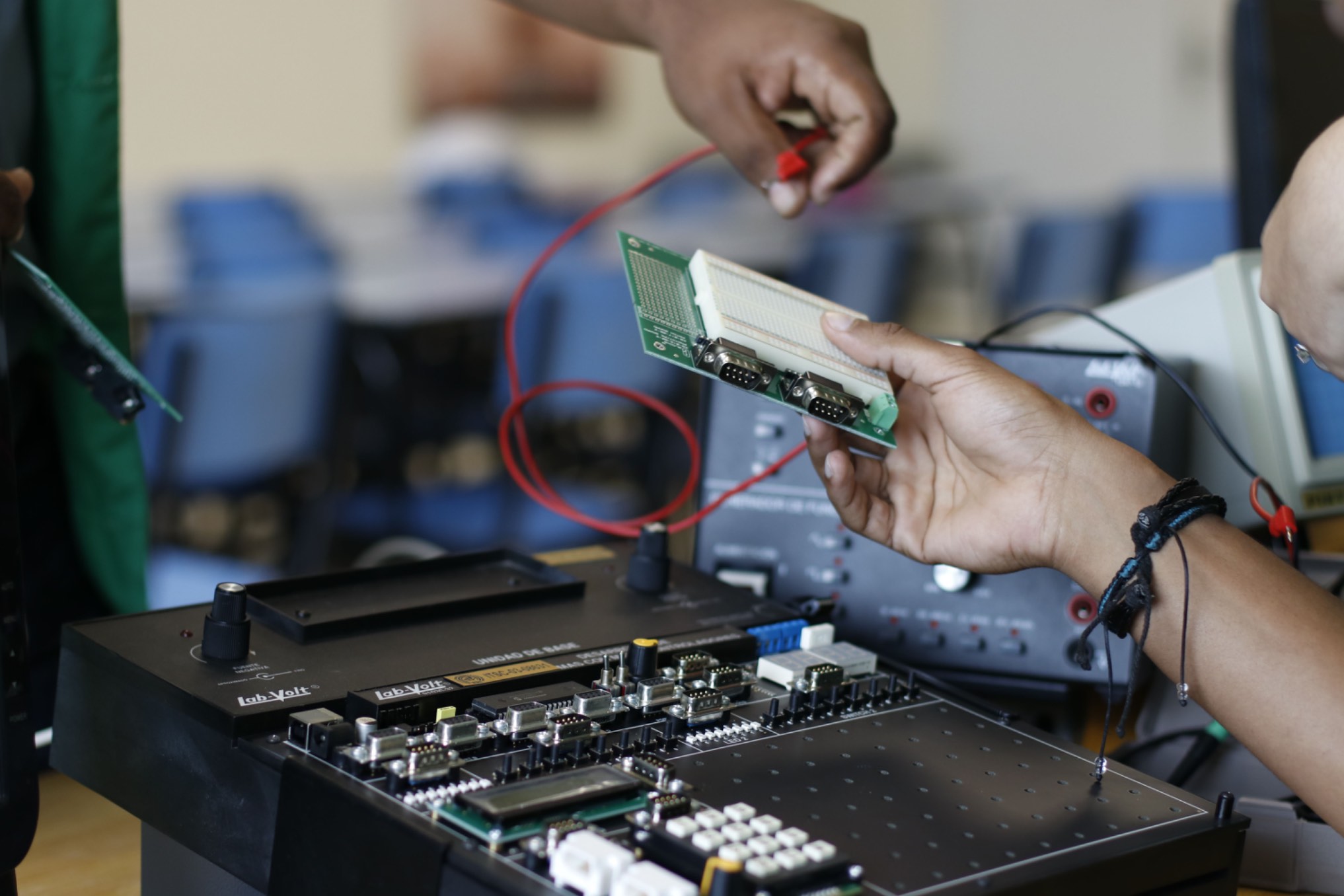
Image credit - Pexels
The European Union's Horizon Europe programme, backed by a budget of €95.5 billion for 2021 to 2027, uses TRL bands to send the funding towards the right stage of development. The European Innovation Council's Pathfinder grants, for instance, target early-stage technology between TRL 1 and 4, offering up to €3 million for projects too early-stage for most private investors. Once a technology reaches TRL 3 or 4, it can apply to the EIC Transition programme, which funds validation work up to TRL 5 or 6 with grants as large as €2.5 million. The EIC Accelerator, by comparison, typically supports technology already at TRL 5 through 8, closer to commercial deployment.
Competition for early-stage grants is intense. As per the EU funding directory EUACC, the 2025 Pathfinder round funded only 44 projects out of 2,087 applications, a success rate of only 2.1%.
Where Does the Technology Readiness Level Fall Short
The measurement system is known to enforce discipline with clear-cut instructions as to when a technology should be elevated to a different level, only when passing the test of a particular level. This provides funding authorities and other investors a consistent way to compare wildly different technologies, from satellite components to medical devices to software systems.
TRL measures technical maturity but leaves commercial viability, regulatory approval, and market demand unaddressed. This means that even a fully functional TRL 9-rated technology can fail commercially because no one wants to buy it, or even if its competitor or a better alternative reaches the market first.
Most noticeably, many tech boards agree that the scale is not linear, and it takes an enormous amount of time for a technology to move from TRL 6 to TRL 7 compared to the time the same technology takes to move from TRL 2 to TRL 3, given that real-world testing is expensive and can be unpredictable. Lastly, the TRL system does not account for how people will interact with a finished technology.
Reading the Scale With the Right Expectations
Technology readiness level is a useful shorthand. It simplifies the understanding of technology to the extent that anyone can understand it and derive its future value and potential. It directly allows an individual to make informed decisions based on technical risks, trials, scope, and application. It explains how a TRL 3-rated technology and a TRL 8-rated prototype are the difference between a promising idea and something ready to be trusted for real use. Remember, it all starts with the simplest version of a paperclip.
