


Introduction
Have you ever watched or listened to a song and felt like it was made specifically for you? For queer women, this didn’t come easily. In pop culture, queer women weren't the ones who stayed, the best friends, or loyal ride-or-die types; they were more often sidelined or completely left out. When they did appear, they rarely made it to the end of their own storylines. Lexa from The 100 is one of the most talked-about examples of a beloved queer female character killed off right after her relationship with Clarke was finally confirmed. The outrage that followed her death in 2016 showed just how starved queer women were for stories that didn't punish them for existing.
This reality hits hard in films, TV shows, and songs. Characters who were bold and followed their own path barely got their stories told. If they deviated from what was normal, the story usually ended super sad. Their identities weren't fully explored and stayed hidden behind someone else's spotlight, not standing strong in their own story.
This is now shifting as more queer women artists are making this change, taking control on their terms.
The Silence That Came Before
For a long time, queer women who didn't fit the mainstream mold had two options in culture: disappear or pay for being visible.
Many artists communicated who they were through coded language imagery that only certain audiences could read, while others looked past it entirely. This goes back further than most people realize. Emily Dickinson's poetry, written in 19th-century New England, is now read by many scholars as encoding same-sex longing through maritime metaphors, ambiguous pronouns, and fragmented syntax desire that was fully present in the work but could never be named directly. The rules hadn't changed much a century later. It was a kind of double life written into the work itself. You could be different and still have a career, as long as you were careful. As long as you left enough room for people to pretend you weren't queer.
What that communicated to young girls watching was simple and devastating: your story ends, and love is temporary. Queer women often appeared only as side notes in movies and shows, never as the stars of their own stories. Growing up without seeing yourself, without anyone to look up to, leaves you alone and confused. That void makes you wonder if there really is something about you that keeps you from being important.
How Queer Women Artists Are Shifting Cultural Narratives
This pattern started shifting when openly queer artists such as Janelle Monáe, Hayley Kiyoko, King Princess, and Samira Wiley stopped hiding their whole selves. Their work centered on their queer identity without softening it for an audience that might be uncomfortable. They stopped asking for permission to exist fully.
Hayley Kiyoko crafted an entire career from unapologetically honest songs and visuals like Girls like Girls, an iconic number that remains unapologetically queer. When the music industry often struggled with what to do with this type of content, she stayed true to herself. Many young fans had never before encountered such authentic representation in mainstream media. Janelle Monáe contributed with her project "Dirty Computer," which celebrated identity through a stunning visual album. This work portrayed individuality as something complete and praiseworthy rather than something to hide or justify. The visual album Janelle Monáe made didn't ask for tolerance but demanded celebration.
What makes these artists significant isn't just that they're openly queer. It's that their queerness is woven into the work itself; their truth isn't a press release. It's in every creative decision they make, who they write about, how they write about them, whose experience gets to be at the center of the story.
Source: Pexels
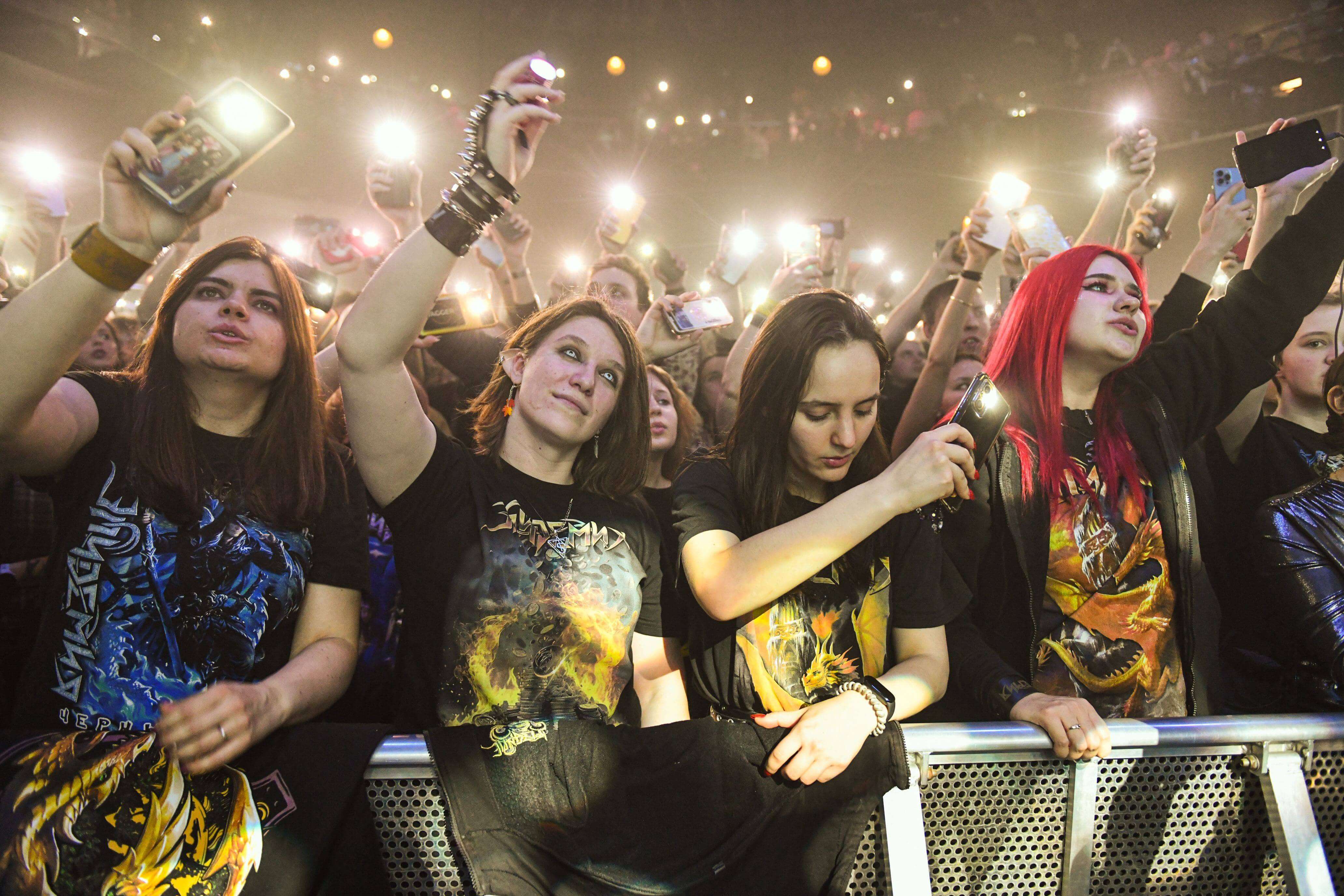
Alt Text: A group of young women at a live concert, holding up their phones with lights on, standing together at the front of the crowd.
What Queer Women Artists' Work Actually Does
When women make art from their own experience fully, their work does something different. The work stops performing for an audience whose comfort comes first. The desire in the music, the love in the story, the grief in the lyrics, none of it is filtered through what might make someone else comfortable. That art exists for the people living it. The change in intention alters how the art feels when received.
Someone who has spent years seeing untold stories will find it disorienting to encounter one meant for them at first. It’s like entering a room and noticing for the first time that your name is on the door. A lot of queer women, that room had been locked for a very long time because the people building the room never thought to put their name on it. That's what changes when queer women make the art themselves. The room gets built differently from the inside.
Research supports how crucial representation is for self-worth, identity development, and mental health in marginalized communities. Still, you don’t need studies to get it; it’s personal. You just need to remember the heady sensation of finding art that calls to something deep in you. Just imagine growing up without that sense of solidarity and community. Queer women artists are the modern bards who carry legends of love, belonging, and freedom from one generation to the next.
The Intersectionality That Can't Be Footnoted
Not every queer woman stepping into visibility is stepping from the same place, and any article that doesn't say that clearly is telling an incomplete story.
Women of color navigate a layered invisibility that others don't. They face erasure within spaces that claim to celebrate diversity. They face pressure from within their own communities. And they face an industry that has historically treated their stories as niche, too specific, not broadly relatable enough for mainstream platforms.
When certain women go mainstream, it tends to be received as universal. When Black women or Latina artists reach the same audience, they are often still categorized separately and celebrated within their circles but not always extended the same cultural reach.
Janelle Monáe carries her Blackness and her full identity without letting either be minimized. That isn't easy in an industry that prefers artists to be one simple, legible thing at a time. The fact that she refuses that simplification and that her work reaches as widely as it does is its own kind of cultural shift.
The most invisible women are rarely the ones leading mainstream conversations about representation. That gap is worth naming, because visibility that only reaches the most palatable version of a story isn't the full picture.
The Cost Nobody Talks About Enough
Openly queer women artists deal with backlash that their more mainstream counterparts don't. They watch their image get used in campaigns by brands that profit from the aesthetic without investing in the communities behind it. Their identity becomes a marketing tool while the actual women behind it remain underpaid and underprotected.
For queer women artists outside Western markets in countries where living openly carries severe social or legal consequences visibility isn't a career risk but a personal safety risk. Some of the most important art being made right now is being made carefully, by women who cannot yet afford to be seen clearly.
Choosing to be visible, on your own terms, in full is an act of courage that deserves to be named alongside the celebration of it.
The Community the Art Builds
What openly queer women artists create isn't just a body of work: it’s a place where people find each other.
Concert venues, online fan spaces, comment sections, and listening parties become environments where women connect, sometimes for the first time in their immediate lives. The artist becomes the common ground, the common ground becomes community, and community becomes the thing that makes it possible to keep going.
There's something specific about what visibility does collectively. When one woman sees another living openly, creating freely, and still standing, it becomes slightly more possible to imagine doing the same. The art reaches people individually, but the effect moves outward.
Coop from the All-American TV series staying in her neighborhood, keeping her friendships, continuing to exist at the center of her own story rather than disappearing to find somewhere safer, continuity matters. It tells queer women watching that you don't have to leave everything behind to be yourself. Sometimes you just insist on your place within the life you already have.

Source: Pexels
Alt Text: Four women of different ethnicities standing together with their arms around each other, looking at one another against a plain white background.
Conclusion
Openly queer women artists are shifting narratives, but representation without structural change isn't enough. That first moment a queer woman sees herself in a song or a book is powerful enough to change everything. But one moment isn't enough. What she needs is a world that already fits her before she arrives. These artists are building it and that's worth showing up for.
