


Introduction
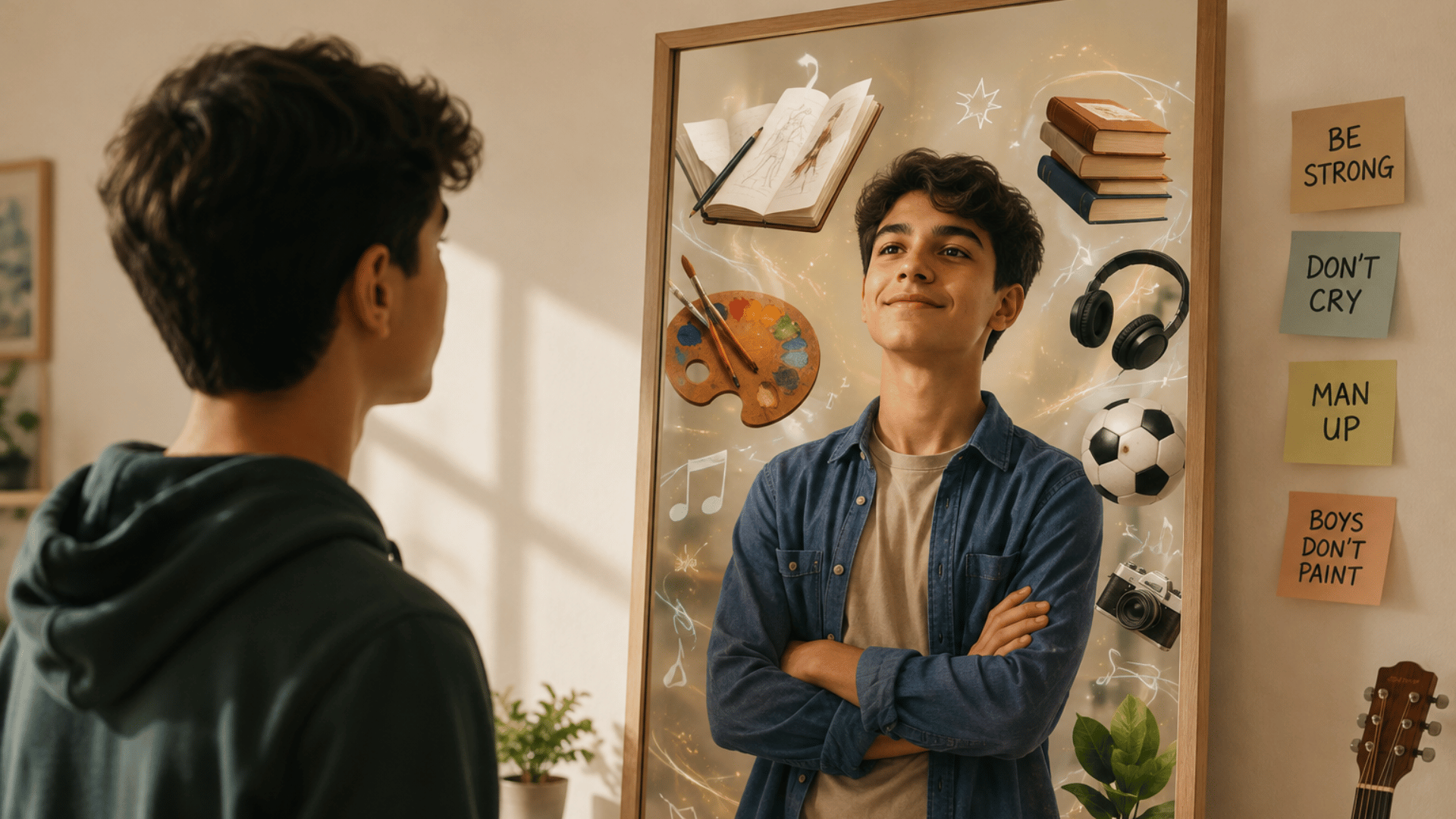
Picture a teenage boy who likes art but doesn't join the painting club at his school because of the fear that his classmates will think it's a "girly" activity. Or imagine a teenager who hides the fact that he's anxious under a mask of jokes since his parents have taught him that crying is a “display of weakness”. Neither of those is an uncommon story; they represent just one of many ways in which rigid notions of masculinity influence teenage boys.
Feminism isn't asking boys to become less masculine. It's asking them to become more human. For growing teenagers today, in a world shaped by social media, unrealistic expectations, and constantly evolving ideas of masculinity, understanding feminism is more essential now than ever.
So... What Is Feminism, Really?
Actor Joseph Gordon-Levitt once said that feminism means not letting your gender define who you are.
At its heart, feminism is about one simple idea: everyone deserves equal rights, opportunities, and respect, regardless of gender.
Contrary to what some social media discussions or public discourses might suggest, feminism is not about elevating women above men, but about living in a society where there is no discrimination based on gender.
Contemporary feminism has evolved to understand that the experiences of people are determined by many aspects other than their gender, such as race, sexual orientation, socio-economic status, ability, and gender identity, among others due to which they might also be subjected to “Intersectional Feminism”. As a result, modern feminism is focused on equality for everyone rather than only a select few.
All in all, feminism implies that you believe women and girls should be accorded the same rights, opportunities, and respect as everyone else and act accordingly.
Why Should Teenage Boys Care?
Initially, feminism may appear to be a topic of relevance only to females. Therefore, if you’re a male, the question of whether it is important to consider feminist concepts for yourself may pop up: "Why would I need to care?" This concern can be easily addressed because feminism isn't just about changing life for girls, it's also about making life better for boys.
Feminism isn't about choosing one gender over another. It's about challenging the stereotypes that hold everyone back.
For teenage boys, those stereotypes could often sound like:
"Don't cry!"
“Man up!”
“Be strong!”
“Never show weakness!”
Over time, these expectations can make it difficult to express emotions, ask for help, or simply be themselves.
Feminism questions such a view on masculinity. It encourages boys to define masculinity on their own terms, not by society's expectations, but by their values. It teaches that empathy isn't weakness, respect isn't optional, and vulnerability doesn't make anybody any less of a man.

A Guide to Growing into a Respectful Man
1. Learn That Consent Starts with Everyday Respect
Growing teenagers must understand that consent isn't only about romantic relationships but also about respecting another individual’s boundaries in every interaction. It is about asking before borrowing anything, verifying before posting a picture of a friend, and giving people their privacy. In essence, it boils down to just one principle - when someone says 'no', respect that decision. Period.
2. Don't Let Gender Decide Your Interests
Love art? Want to learn how to cook? Prefer pink over blue? Go for it. Your hobbies, clothes, or favorite colors don't make you "more" or "less" of a man. The ones that are outstanding are not those who conform but rather those who are sure of themselves.
3. Feel Every Emotion Without Shame
Who made up their mind that anger is the only acceptable emotion that boys should exhibit? It’s all right to cry, to feel afraid, to be nervous, or to seek help. Emotional awareness does not imply weakness; it actually means increased self-awareness and better social relations.
4. Respect Every Body-Including Your Own
Respect for boundaries starts with the little things. For example, if your brother or sister is younger than you, or even a friend does not feel comfortable hugging you, respect their wish. By asking "Is it alright if I hug you?" and taking their response seriously, you will teach your sibling or your friend one very important lesson: everyone should be able to control who has access to his or her body space. It is the same for you.
5. Stop Believing in "Boys' Things" and "Girls' Things"
Why should it be said that cooking is for girls and playing football is for boys? All hobbies, jobs, games, and even housework do not have any gender associated with them. Go ahead and try things that you actually like doing.
6. Question What Society Tells You
From social media to movies, you'll constantly be told what a "real man" looks like. However, before believing any of these, you need to stop and ask yourself “Does this reflect the kind of person I want to become?”, and consider whether all these things are respectable and acceptable for you.
7. Redefine What It Means to "Be a Man"
For years, the message to boys has been that to be a man is to be tough, never cry, and to always be in control. However, true strength is something else. It is about speaking out when things are not right, taking responsibility for one’s actions, treating others with dignity, and being brave enough to show kindness.

How Feminism Helps Boys Become Better Men
You Build Healthier Relationships
Whether it's your best friend, your sister, your parents, or someone you admire, every relationship works better when there's mutual respect. Learn to listen, communicate honestly, and respect the boundaries as it makes other people feel comfortable around you. And that's what strong and long lasting relationships are built on.
You Become Emotionally Stronger
You all would have probably heard that "real men don't cry." But keeping everything bottled up doesn't make life easier; It just makes it lonelier. Talking about your feelings, asking for help, or simply admitting you're having a hard day takes courage. And it makes you far more resilient in the long run.
You Stop Chasing Someone Else's Idea of Masculinity
Confidence isn't about proving you're the toughest person in the room. It's about being secure enough to be yourself without seeking validation from stereotypes or peer pressure. Attempting to fit into everyone else's definition of a "real man" is exhausting. Confidence comes from being secure with who you are and accepting it. You don't have to be pretentious or emotionless just to fit in.
People Respect You for the Right Reasons
Being respected isn't about being the strongest or the loudest person in the room. The best leaders don't just dominate. They collaborate! They listen, include others, admit mistakes, and earn respect through integrity rather than insecurity.

Conclusion: The Future Needs Better Men, Not Just Tougher Ones
Imagine that same 15-year-old boy entering the painting club without worrying if people will think it's "girly." Imagine another reaching out to a friend when he's struggling instead of pretending to be alright. They may seem like small moments, but they're signs of something much bigger. A generation of boys growing up free from the pressure of outdated stereotypes and unaccounted societal norms.
At its core, feminism was not about dictating what young boys should be like. On the contrary, it was all about allowing them to figure that out on their own accord. To be caring without being labelled as sissies. To be assertive without being mean. To be emotional without feeling embarrassed.
Because the world doesn’t need boys being raised to always keep their true selves in check. It needs young men who are secure enough to be themselves, respectful enough to value others, and brave enough to challenge ideas that no longer serve anyone. And that isn't just a win for women. It's a win for everyone!
