


Introduction
Scroll far enough through any social feed, and you'll find it: a red lipstick selfie captioned “unapologetically me,” two posts down from a manifesto about dismantling patriarchal structures, three posts down from an ad selling “girl power” on a tote bag. All three call themselves feminist. They don't agree on what that word is supposed to do. That tension, glossy self-expression sitting right next to structural critique, is more or less the whole story of neofeminism.
What Is Neofeminism?
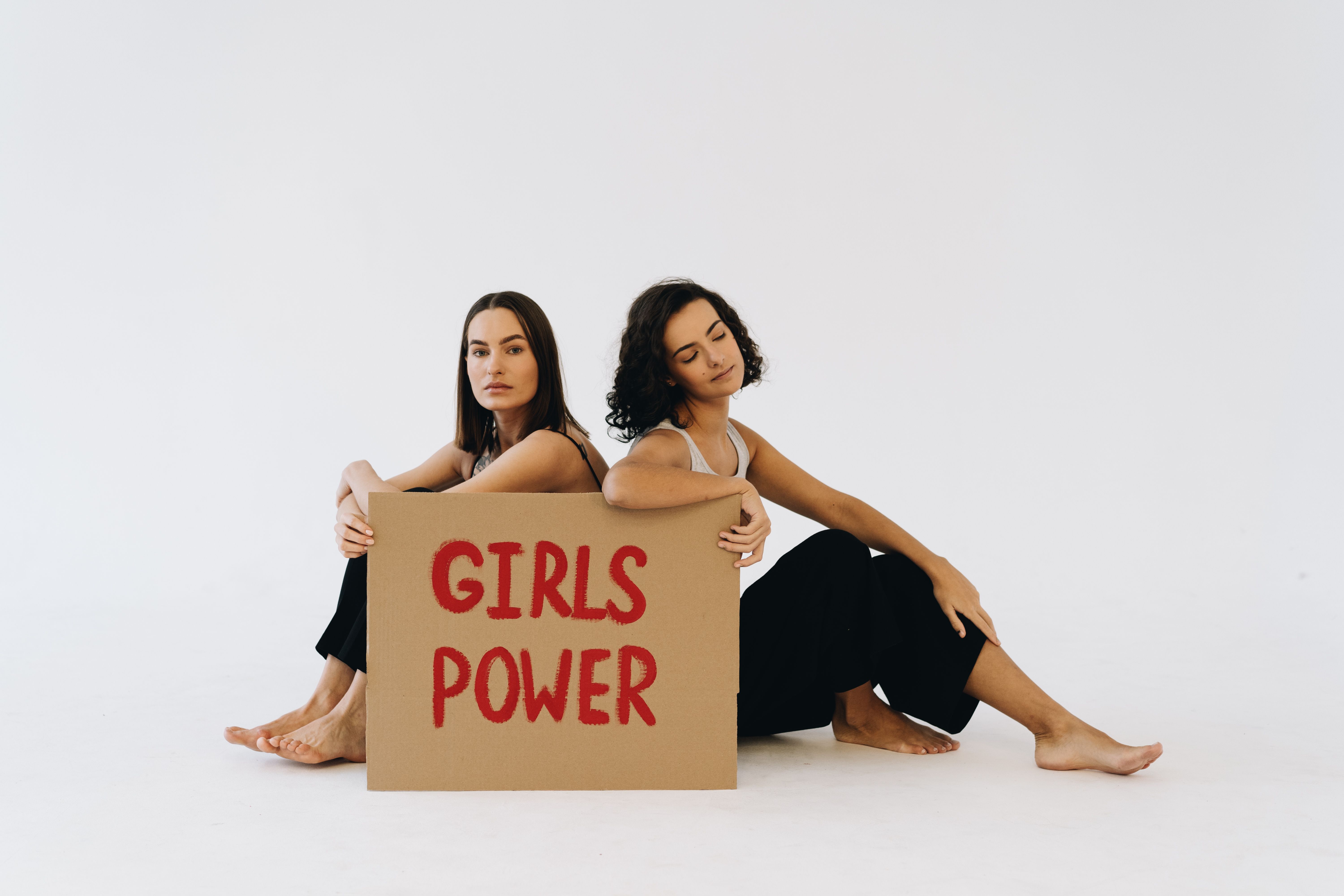
Neofeminism is a personal and individualist approach to feminism, as opposed to the more traditional focus on collective political action. It embraces the notion that a woman may manifest power in her own way, through her job, her *********, her clothing, her space; that it's okay if it's not as described in the old men's feminist rulebook, that it doesn't need to be. This take on the concept of sex alongside work has been a staple of pop culture for a long time, and it has made plenty of public figures walkable examples of just such an idea.
Since the late 1990s, a separate strand of neofeminist thinking has grown out of academic law, one less interested in personal branding and more interested in what second-wave feminism got wrong, particularly how it tended to treat a “woman” as a single universal experience, glossing over race, class, and other layers of disadvantage almost entirely.
From Collective Movement to Individual Empowerment
Second-wave feminism, the 1960s-through-80s era of consciousness-raising groups and legislative campaigns, mostly organized around shared demands: equal pay, reproductive rights, an end to workplace discrimination. Neofeminism keeps those goals in the background but shifts the foreground toward the individual. Instead of asking what women, collectively, are owed, it asks what any one woman is free to choose for herself, and whether that choice, on its own, counts as a feminist act.
That shift changes who gets to claim the label and what counts as progress, and it's exactly where most of the current arguments about neofeminism actually live.
Why Intersectionality Sits at the Center of Neofeminism
In 1989, legal theorist Kimberlé Crenshaw used the term "intersectionality" to refer to the intersections of discrimination and intersectionality related to race and gender. She said a black woman's face of bias isn't just “woman” plus “Black.” It's its own specific thing, and many older civil rights and feminist models weren't designed to perceive it.
No matter which type of neofeminism you're discussing, intersectionality has become an important part of the conversation. This approach recognizes how race, class, gender, disability, and ********* can shape women's experiences differently. For a deeper understanding, explore intersectional feminism and how it applies to different forms of inequality.
Beyond a Single Story of “Woman”
This translates to neofeminist spaces generally thrusting race, class, disability, *********, and gender identity into the conceptual beam, rather than treating them as mere accessories. It also requires recognizing that feminism isn't necessarily a perpetrating force when it is not. A workplace policy that helps a white executive but does nothing for a low-wage worker of color isn't a feminist win. It's a partial policy, wearing a feminist label.

The Modern Challenges Neofeminism Still Has to Answer
The Choice Feminism Problem
The principle of neofeminism is that a woman's choices are "just" by definition because they are hers; there's a fair question to ask here: Just with respect to what? The concept of choice feminism has drawn commentary from political theorist Michaele Ferguson, who has praised its liberal, individualistic foundations. Philosopher Serene Khader takes it one step further in her book Faux Feminism, claiming that if individual choice in what sorts of change lead to a feminist revolution, structural inequality will parade through the halls unchallenged. A woman choosing to leave her career to raise children and a woman being economically pushed into the same decision can look identical from the outside, but calling both equally “empowered” erases the difference that actually matters.
Choice feminism isn't wrong; women deserve autonomy. It's just an incomplete tool for measuring whether that autonomy is real or just the least-bad option on offer.These ideas also become clearer when we look at feminism examples in real life, where individual choices intersect with broader social expectations.
When Empowerment Becomes a Product
Neofeminism's comfort with personal branding has made it easy to sell. Researchers who study this, Sarah Banet-Weiser among them, describe a version of feminism that has become genuinely popular in mainstream culture, partly because brands have figured out how to package it. Empowerment gets marketed as something you can purchase: a T-shirt, a skincare routine, a keynote speech about “owning your power.” Scholar Angela McRobbie has a name for the result, a kind of postfeminist performance where a company gets to look progressive while doing nothing to change the structures that made empowerment marketing necessary in the first place.

None of this means every woman posting a confidence quote is being cynical about it. It means the version of feminism that photographs well isn't automatically the version that changes anything, and neofeminism hasn't fully worked out how to tell the two apart yet.
Whose Voices Still Get Left Out
Here's the sharper version of the same problem. Commodified, choice-driven feminism tends to travel furthest for women who already have resources, visibility, and a platform. A woman with a public following can rebrand a controversy into a personal-empowerment story. A woman without one usually can't. Critics of choice feminism keep landing on the same point: the freedom to define your own empowerment isn't distributed evenly, and pretending it is just hides whose choices are actually constrained.
That's the same intersectionality gap neofeminism claims to have solved, showing back up in a new outfit.
Conclusion
Neofeminism has genuinely widened what counts as feminist: more room for personal identity, more insistence on race and class as part of the picture, more permission for women to define power on their own terms instead of borrowing someone else's definition. Those are real gains, not decoration.
But widening the definition isn't the same as finishing the work. As long as empowerment can be bought, branded, and sold back to the women it claims to represent, and as long as some women's choices carry real freedom while others carry real constraint, neofeminism has more to prove than to celebrate. Naming that gap honestly is what keeps the word meaning something.
