


Overview
Diaspora women navigate multiple cultural identities, often feeling caught between worlds and constantly translating themselves.
Belonging becomes a practice rather than a place, accompanied by grief for homes that no longer exist as remembered.
Women balance conflicting cultural expectations while serving as ambassadors, tradition holders, and bridge builders across communities.
Despite the challenges, diaspora women develop remarkable resilience and need recognition, support, and permission to define themselves authentically.
Sidebar
The identity paradox.
The weight of cultural expectations
The strength in the struggle.
Moving forward: What they need.
Living in a different world apart from the one you are familiar with brings about a very particular kind of fatigue. It is the mental exercise of switching between languages, the time-consuming tuning of the parts of you to be disclosed in the various places, the ongoing arbitration between respecting your heritage and asserting your independence. For women from diaspora it is not occasional; it is their daily life.
Always in a state of translation, of not only words but also identities. Although this situation can be rich and empowering in its own right, it still brings a set of challenges that are uniquely associated with it, which are not less deserving of being recognized, understood, and talked about.
The Identity Paradox
When you speak to a diaspora woman, you may get different answers depending on who she is talking to. There is her nationality , her parent's origin, and the complex cultural ecosystem she created for herself, one that does not fit into any box.
In a way, she is too much of one thing and not enough of another one; too Western for traditional family gatherings, too ethnic for her corporate workplace, too assimilated for her immigrant community, and too foreign for the country she has lived in for decades.
Truth to be told, diaspora women usually possess an incredibly sophisticated sense of identity just because they have had to. They learn that they can be critical and loving towards their heritage, deeply connected to their ancestors while constructing entirely new branches, and respecting the roots while actively choosing the way to go.
But this sophistication has a downside. The mental burden of constantly putting the context around oneself, explaining and defending oneself is invisible labor that never gets recognized or acknowledged.
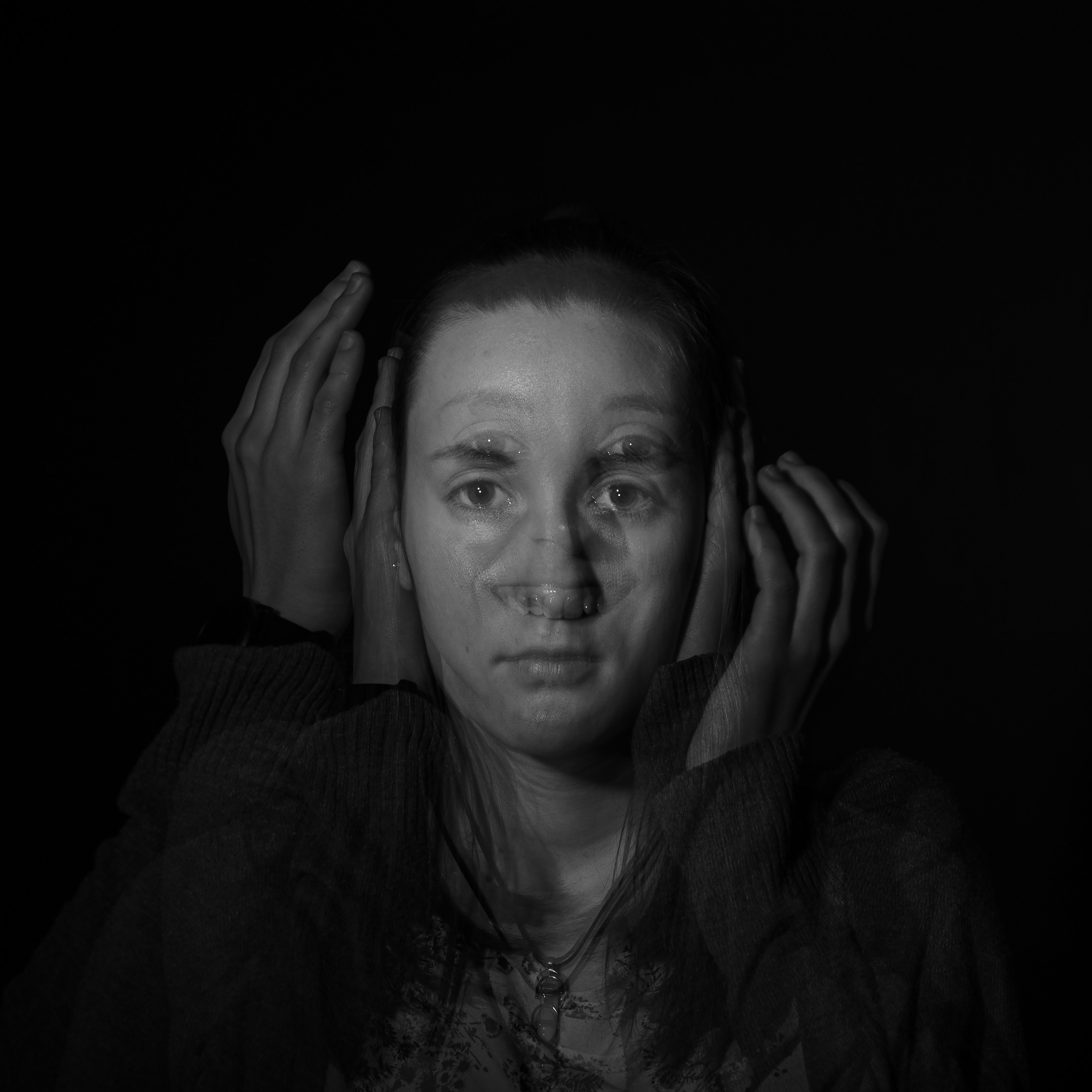
Alt: White woman with different hands on her face.
Image Credit: Unsplash
The Belonging Dilemma
Belonging is complicated when “home” exists in multiple time zones and your sense of self spans different continents. You like yourself in spaces that don't technically belong to you, or feel like an outsider in the very places you're supposed to call home.
For many diaspora women, belonging isn't a place, it is a practice. It is that friend group that understands your cultural references without explanation. It is the ability to switch between languages mid-sentence without apology. It is finding humor in the absurdity of living between worlds rather than feeling broken by it.
But here is what we don't talk about enough: the grief that comes with this kind of displacement. The longing for a home that may no longer exist the way you remember it, or that you never got to experience fully in the first place. The complicated relationship with "back home", a place that holds deep meaning but still feels strange.
There is also the unique isolation of feeling unseen; when your experience doesn't fit conventional narratives about immigration, identity, or culture, it is easy to feel like you are navigating everything alone. Your struggles might not look like your parents' struggles, but they're real nonetheless. Your identity might not look like the simplified versions represented in media, but it is valid nonetheless.
Alt: Woman covering her face
Image Credit: Unsplash
The Weight of Cultural Expectations
Identity can be perplexing and belonging can be unattainable, but cultural expectations are still a lot to bear. Women in the diaspora often find themselves in the position of cultural ambassadors, family interpreters, tradition holders and bridge builders-all of which they have to do simultaneously.
They are told to enrich the culture in their own way while trying to fit into the new one, to perform the traditional ceremonies while initiating the new ones, to satisfy the family wants while pursuing personal dreams. The weight of the responsibility to give the best representation of your culture, not to support the negative stereotypes, to make the family sacrifices "worth it" is a lot.
There are also other expectations, be educated but don't be too ambitious, be free but prioritise the family. Be a woman of the world but not too Western; have a relationship but marry within the community; have a job but do not neglect the traditional gender roles, voice out but do not shame your elders.
Rules change depending on the context and you are expected to navigate it all with ease. A lot of diaspora women live double lives like pros, not because they are being deceitful, but that is the only way to maintain peace and be free at the same time. It is a matter of learning which part of your life to show and share with the family and the part to keep away. The diaspora woman has to master the skill of selective disclosure.
The thing is, while this separation of life areas is protective, it can sometimes be draining. Maintaining different versions of oneself daily can be a source of internal pressure.
Alt : Black woman with Afro sitting on an orange couch.
Image Credit: Unsplash
The Strength in the Struggle
One aspect of the discourse around diaspora identity that usually gets neglected is the reservoir of resilience, creativity, and wisdom, and it is this very quality that the diasporan woman has to manage the complexities of the situation.
Women of the diaspora possess outstanding skills. They become inner cultural generators and mediators who can easily converse with different worlds. They not only learn to create a strong sense of togetherness in the most unlikely places but also to have the 'family of choice' alongside their 'family of origin.'
Moreover, they acquire a special kind of understanding that is derived from being another, from being in between, from having to constantly interpret oneself for the different listeners.
Moving Forward: What They Need
What diaspora women need isn't pity or oversimplification, but recognition of the full complexity of their experiences. They need spaces where they don't have to translate themselves, where their multifaceted identities are celebrated rather than questioned.
It is essential for them to be provided with mental health support that takes into consideration the distinct stress that comes with living in two cultures at a time. They also require representation that will not be just token diversity, but will actually show the true life of the diaspora community.
However, the most crucial thing is that they should be allowed to choose their own way of self-definition.
Most importantly, they need permission to define themselves on their own terms. To be works in progress. To honor some traditions and let others go. To create hybrid identities that feel authentic rather than fractured.
Conclusion
Being a diaspora woman signifies bearing the weight of different worlds. It is a complicated, tiring, and often solitary experience. However, it is; powerful, creative, and very meaningful. Their narratives are to be narrated in full not as tales of whatever the opposite of belonging is, but as tales of belonging created through entirely new avenues.
