


For as long as we can remember, women athletes have faced a lot of issues. Ranging from staying strong as a competitor to having to succeed despite the limited budget and resources provided. Another battle they face is the one that happens outside the field. It is the battle that happens in the newsroom where decisions on what to report are made— what is worth reporting and what is not. In the past, those decisions never favored women. But things have changed, and this wasn't due to traditional media finally catching up. The reason is that the athletes decided to stop waiting.
For women athletes, social media gave them a direct channel to the people who cared about them – one that the sports world could not offer. They have leveraged it for creating audiences, changing the conversation, and monetising the personal narrative, all of which would have been unimaginable two decades ago.
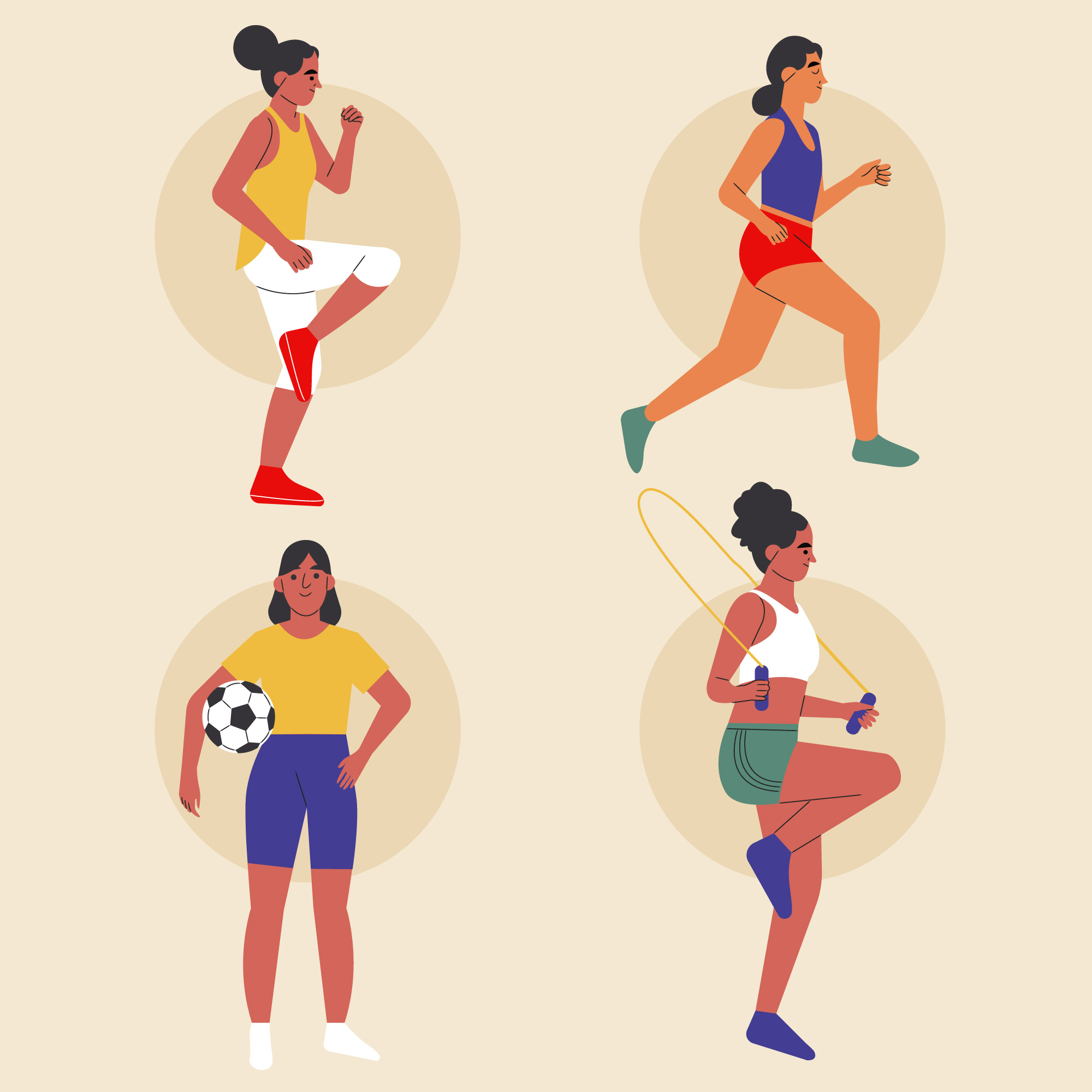
Image Credit: Magnific
Alt: Sports illustrations by women
The Reality of Women’s Sports Before Narrative Changed
In the last 30 years, the share of women's sports in the total amount of sports coverage in mainstream media was between 3% and 5.5%, which is just enough to be counted. That's where women's sports media coverage was stuck until around 2019, when digital, streaming, and social media started to make an impact.
However, the coverage gap didn't exist solely in terms of time on screen. It was also related to the way women athletes were represented whenever they were represented. The emphasis was more on what they look like or their personal life instead of their performance. The focus was more on their appearances not their capabilities or athletic achievements.
Sponsorship was handled in a similar manner. Women had less leverage and were less exposed to brands, unlike their male counterparts. Endorsement deals were very difficult to come by, and the contracts that were obtained typically embodied a marketable image more than an athletic image.
Year after year, sponsors made it clear that they had to be palatable first and great second.
The Change That Came Along The Line
Instagram, TikTok, YouTube, and podcasts weren't just providing new platforms for women's athletes. They cut out the middleman. An athlete with a phone and a story wasn't left to prove her worth to a broadcaster, or to a journalist to cover her, or to a sponsor to greenlight her message. She could create an audience of her choosing and see the numbers make the deal.
The recent USC Annenberg study on "Owning the Narrative" shed more light on athletes who now produce, publish, and earn money from their original content without the help of traditional media.
As reflected in the data by the UN, discussion about women's sports on social media increased to 18.5% across the year in 2022, steadily rising on a year-on-year basis. In the United States alone, viewers watched 46 billion minutes of female sports media by 2025. This did not just happen out of the blue. This reminds us of the time when audiences were unable to locate content of their favorite athletes without reliance on established gatekeepers.
It's not just the quantity of the relationship between fans and athletes that changed; the quality of it has as well. Social media is more than just a medium for broadcasting; it's a medium for conversation. Athletes who post on a regular basis are creating a community of individuals who follow training programs, celebrate personal achievements, and feel a sense of ownership in the athlete as a person behind the performance. Such loyalty doesn't vanish when the team has a rough year.
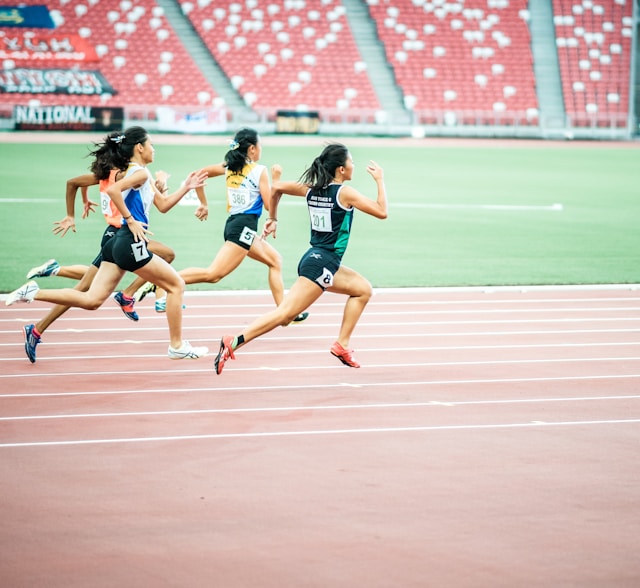
Image Credit: Unsplash
Alt: Women on Track
Women Athletes Leading the Digital Revolution
Naomi Osaka: Beyond The Tennis Court
Naomi Osaka, in May 2021, revealed on Twitter that she would not be making an appearance at French Open press conferences due to her mental health. This went viral in the sporting world and beyond. It was not only what she said that was amazing, but how she said it, in her own words, and without a publicist’s carefully crafted message or a journalist's spin.
In fact, Osaka's mental health advocacy was "most striking in terms of its favourable attention and wide recognition". The fact that she didn't go through a sports desk, she communicated directly. That directness shifted people's perspectives on the lives of athletes. Osaka also wrote an essay for Time Magazine about the right to "take a break" from the media, highlighting that she was not just an athlete speaking about wellness. She was proving that in the minds of others, an athlete's stage could carry weight far from the athletic diamond.
Simone Biles
Simone Biles can be categorised as one of the most successful American gymnasts of all time. But we can’t say just the medals made her a cultural icon. Biles, who had dropped out of a couple of events during the 2020 Tokyo Olympics to focus on her health and safety, was the main topic of conversation worldwide and firmly in the spotlight through her own social media.
The polarizing reception of public opinion made the point of what was at stake when women athletes are genuine.
When Biles took part in the 2024 Paris Olympics, and the documentary Simone Biles Rising premiered on Netflix, she had developed a brand that conveyed more than she did for her gym sets and uniforms: that she was someone whose story was worth listening to beyond gymnastics. Since then, she has been appointed to the board of Religion of Sports, a media outlet dedicated to women of Black and brown communities and mental health stories. This shows that her leap of faith proves that there is no limit to anything. She went from being just an athlete to a storyteller and content creator.
The Benefits of Visibility
The financial rationale for everything has changed drastically. With the advent of NIL (name, image, and likeness) in college sports, student-athletes now have the opportunity to create brand relationships before entering the professional arena. Whereas in the past, athletes built their fanbases through informal means and then negotiated, it's now under a formal economic structure.
Influencers have a lot less power than female athletes, who are the most influential types of influencers, and 88% of consumers consider professional women athletes to be impactful models for young women. Brands are waking up to the fact that an athlete's following is not vanity, it's reach, trust, and purchasing power in one.
This ecosystem is becoming more sophisticated, and it's evident in the WNBA. At the time of the 2024-25 analysis, over 450 brands and 530 sponsorship partnerships were being tracked throughout the league; a number that would have seemed unfeasible 10 years ago. Women athletes who have large followings now have a lot more leverage to negotiate from both sides of the table than any of their predecessors.
Image Credit: Unsplash
Alt: Social media icons
Challenges That Came with The Digital Revolution
The popular saying that says, “Nothing is free”. Yes, we can say the same about this situation as well, but this is unacceptable. According to a study by Sheffield Hallam University, revealed that the number of women athletes who experienced gender-based abuse rose by 44% compared to 2023, with 71% reporting direct abuse and 49% of female athletes experiencing gender-based abuse. During tournaments, female athletes are 19% more likely to be subjected to online abuse than male athletes, and this percentage rose to 29% in the 2023 Women's World Cup.
The same social media that was an opening platform for Osaka’s mental health discussion is also causing mental health issues for others as a result of accessibility. A lot of anonymous accounts flood the DMs of these athletes with harassing messages.
According to research examining social media content, it was revealed that most female athletes have received sexist comments, and the abuse was often more sexualised and gendered for women than it was for men. In the 2024 Paris Olympics, almost half of the abusive content monitored was racist or sexist posts directed at the female athletes.
As much as there is the less glamorous responsibility of having to be on the field, being a good athlete, and creating a great online presence at the same time. An athlete fully dependent on social media platforms is a risk on its own. Whenever Instagram changes its rules or TikTok makes new policies, an athlete's reach can change overnight. I think it is safe to say the gatekeepers are still there, but they have taken a different form.
Conclusion
Female athletes no longer compete for just medals and trophies. They now compete and strategise for attention, influence, and ownership of their own narratives. By building audiences directly, they have created something traditional media could not give them and have ever since struggled to take away.
