


Introduction
Women’s reproductive rights are up for debate and everyone has a say in it. When laws, clinics, and politics wrestle over women’s bodily autonomy, the argument is rarely only legal. It is moral, material, political— and often intimate. In my work as a writer who watches law meet lived reality, I keep returning to a single, uneasy question: if women’s intimate life choices depend on volatile nature of the laws, who holds power over woman’s body? Is it the courts, the legislatures, medical systems, or the women themselves?
American Rupture and Fragmented Sovereignty
The U.S. landscape after Dobbs v. Jackson (2022) is not simple reversal to pre-Roe era; it is a fracture map of sovereignty. The Supreme Court’s judgement removed a federal constitutional right and bestowed decisional authority upon the states. The result is a patchwork of total bans, gestational limits, and protective “shield” laws in different states. Meanwhile, a political circus is broadcasted by state courts and legislatures which continue to litigate and legislate anew. Therefore, the answer to “who controls access?” changes from state to state.
This fragmentation has practical consequences on where care happens and how it is delivered. According to research published on virtual clinic abortion in the U.S. after Dobbs, the number of virtual-only abortion clinics increased from 11 to 20. These clinics use telehealth to prescribe abortion pills and mail them to patients. Moreover, data from Aid Access (an online telemedicine provider) shows that the daily requests for self-managed abortion medication almost doubled since the Dobbs decision.
Besides telemedicine and online abortion services, many women have been travelling across state lines to reach care in permissive states. Data released by the Guttmacher Institute show both decline and continuities in abortion services depending on local law and infrastructure. When perceived from the lens of legal philosophy, these changes demonstrate how law reshapes geography and how geography shapes bodily autonomy.

Law As Theatre: The Drama of Restriction vs. Liberation
Law is performative: it signals who is valued and who is regulated. After Dobbs, state-level statues and court decisions do more than regulate clinics— they monger fear. Criminalization regimes, reporting requirements, and prosecutorial discretion make reproductive health care adversarial. On the other hand, state constitutional protections and litigation in some states have preserved access, thereby showcasing the dual nature of law as protector and oppressor.
This dualism does not negate the fact that the act of controlling and regulating women’s right over their own bodies is an act of asserting power. Power, as defined by Max Weber, is the ability to impose one’s will on others. And law— it remains a key mechanism to legitimize and organize power. Regardless of whether the changes in abortion rights stemmed from religious beliefs, moral epiphanies or political pressure— they still convert human bodies into sites of regulation.
Mechanisms of Governance: Who Really Controls the Body?
The question of “who controls a woman’s body?” is not simple because the answer is neither “the state” nor “the woman”. Rather, it’s an interplay between different actors and mechanisms.
For instance, legal gatekeepers possess the first key of regulative power. Legislators and judicial authorities craft and enforce rules about what counts as legitimate reason for abortion, who may perform it, and under what conditions. These rules then hand over the authority to medical practitioners and institutions. In several jurisdictions, access to abortion facilities depends on a doctor’s judgement and the decision of hospital boards.
It is not guaranteed that clearing these checkpoints will assure access. The ability to pay, to travel, to access telemedicine, or to take time off also decides whether abortion, even if legally available, is practically attainable for women.
Last, but not least, there are also social and cultural norms. Despite frequent debates on women’s ownership over themselves, there are many women whose idea of abortion is shaped by religious influences and gender expectations. These factors push them into a dilemma about whether they can or should seek abortion, even if absolutely necessary.
Taking these aspects into consideration, it is clear that often the “choice” becomes embedded in social narratives rather than pure autonomy. In simpler words, control is diffused. Even when the law says, “women decide”, other systems at play introduce their own filters.
Abortion Rights Around the Globe
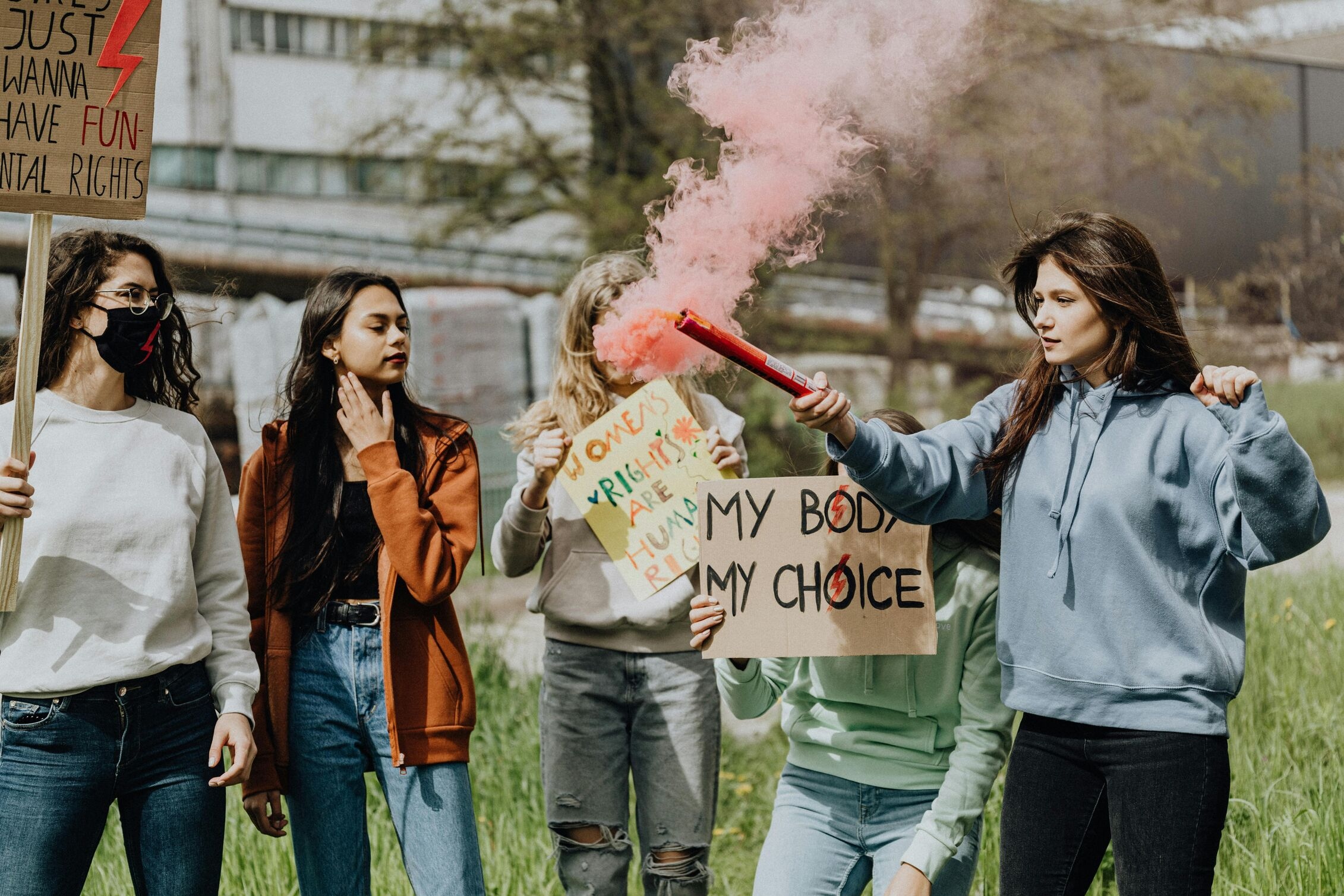
The U.S. is not alone in this contest. In countries like Poland and El Salvador, restrictive regimes have persisted and intensified over the years along with growing resistance at grassroot levels. Poland tightened its restrictions and applied a near-total ban on abortions in 2020. This resulted in large-scale civic protests and prosecutions. Similarly, in El Salvador, decades old absolute bans have led to prosecution of women after obstetric emergencies. These two examples highlight how social movements can re-politicize private bodies into public trial.
There is a stark contrast in legislation as we move towards Latin America and parts of Mexico where courts and state legislatures have decriminalized or increased access.
Let’s shift the lens to my home country, India. In 2021, India revised the Medical Termination of Pregnancy (Amendment) Act, 2021, and expanded gestational limits for certain categories to 24 weeks. These categories include survivors of ****, minors, differently-abled women, and those facing contraceptive failure. In 2022, the Supreme Court of Indian ruled that all women, regardless of marital status, have equal access to abortion up to 24 weeks. In fact, this decision called “marital status” distinction as “artificial and constitutionally unstable”. While the nation still faces issues with procedural obstacles, it is quite profound that debate of abortion here is more focused on medical challenges rather than personal opinions.
The global picture is therefore mixed. There is progress in some places and retrenchment in others. Some nations view the debate as anti-traditional, while others perceive it as step to improve healthcare and make it accessible for all.
The Moral Argument And the Right to Decide
At the end of the day, the fight over reproductive rights is a fight over moral authority. It is about who gets to decide what a “good” life requires, and whether the state may compel someone to continue pregnancy. After following several virtual discussions, I came across a perspective that shook me to the core: a person opined that **** survivors should be allowed to abort— but only with the permission of the “father”, i.e., the perpetrator, because he also has the right over the child. Although this is an extreme thought, it reflects how often discussion on abortion reduces women’s identity from being a human to being a mere body that carries a child.
Moreover, the argument that state has the authority to “compel” a pregnancy makes me wonder about the outcome of forced parenthood. Unprepared mother, financially unstable household or an incompetent family unit barely sounds like the ingredient necessary for a good life for an embryo that many passionately insist on calling a “human”.
My reading of the recent legal and social shift made me understand that this form of control is not singular. It is diffused among different actors, such as legislators, adjudicators, doctors, and social norms. However, I do believe that there is another actor in this mix which is quieter but decisive. It is the agency of women and pregnant people—their network, choices, and creative adaptations.
This is not a romanticization. Choices constrained by money, geography and policing is met with expanding social solidarity. Pro-choice clinics, volunteers, and online providers have created lifeline— another form of governance that competes with state control.
The Body, the Battlefield, the Belonging
In tracing laws, courtrooms, and clinics, we circle back to the most personal of truths— control over the women’s bodies is not singular. It’s shared, sometimes stolen, and sometimes reclaimed. The state writes its rules, the courts interpret, the medical system mediates, and society narrates what a “good” woman should do.
Control, as we see across borders, is not just exercised through bans or permission. It’s embedded in the gaze that questions women’s reasons, the bureaucracy of signatures, and the social judgement wrapped in phrases like “bad charactered woman”. The body, therefore, has become a site where power performs itself; sometimes through law, sometimes through culture.
As journalist, essayist, and abortion care worker, Hannah Matthews once wrote, “I don't often engage in debates over abortion rights, for the same reason I don't sit down to share a meal at any table where I am on the menu. My body is not a theory or a talking point, and neither is yours.”
This is the essence of the fight. Women’s bodies are not abstractions to be legislated or moralized. They are lived realities, capable of joy, pain, decisions and contradictions. So, when we ask, “who controls women’s bodies?”, the answer ideally should be “No one, but the women themselves”. But in reality, the honest answer is, “everyone else is still trying to”.
