


Introduction: Two Educators, One Century Apart
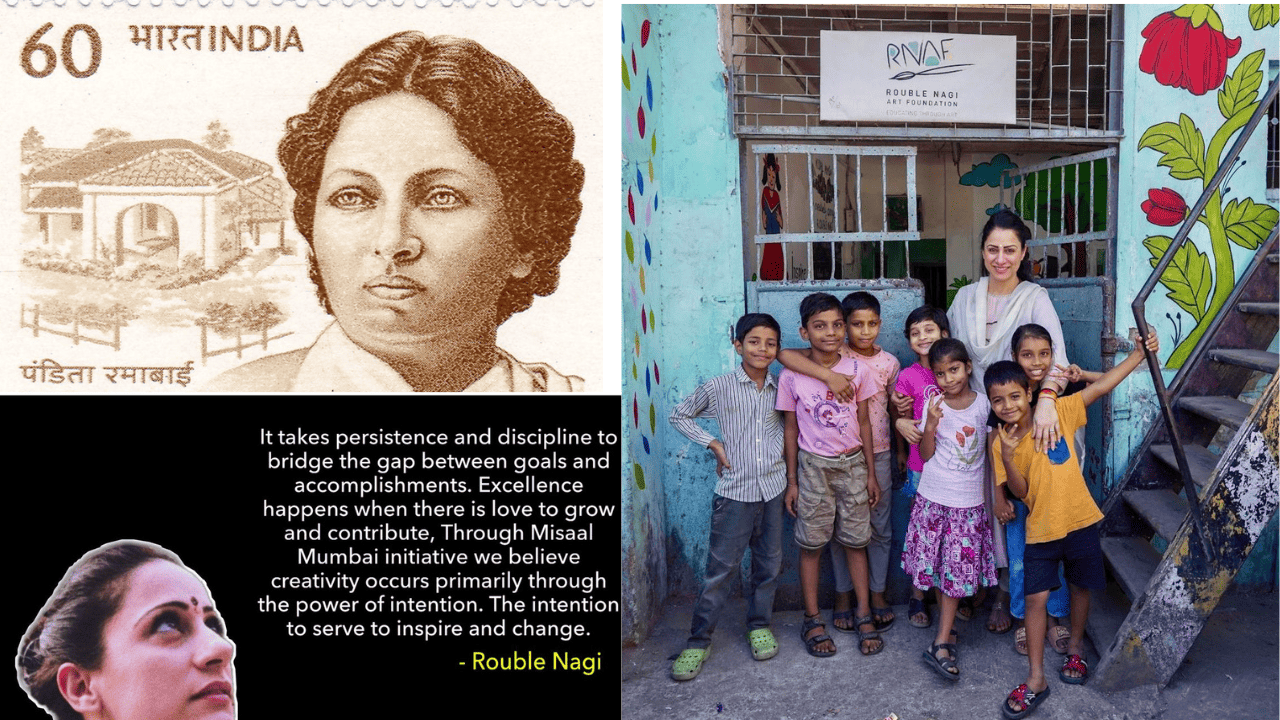
Indian teacher Rouble Nagi won the $1 million Global Teacher Prize 2026 at the World Governments Summit for her contribution towards educating children (World Governments Summit, 2026). Which was done, not from working within India's public school system, but by building an alternative to it: over 800 community learning centres, painted murals as classrooms, reaching a million children whom the formal school system had left behind. The irony here is that the same country celebrated globally for grassroots educational innovation still struggles to deliver foundational literacy through its own public schools. This not a new page in history. Over a century ago, Pandita Ramabai, a social reformer and champion for women’s education, built Sharada Sadan on the same premise that Rouble Nagi's work embodies presently that education succeeds when it is measured by self-reliance and outcomes, and not by proximity to formal state institutions. This can be called as sustainable education ecosystem: one designed to produce independent, capable people rather than students becoming merely enrolment numbers, and Ramabai remains its clearest Indian blueprint.
Sharada Sadan: Founding Principles and Outcomes
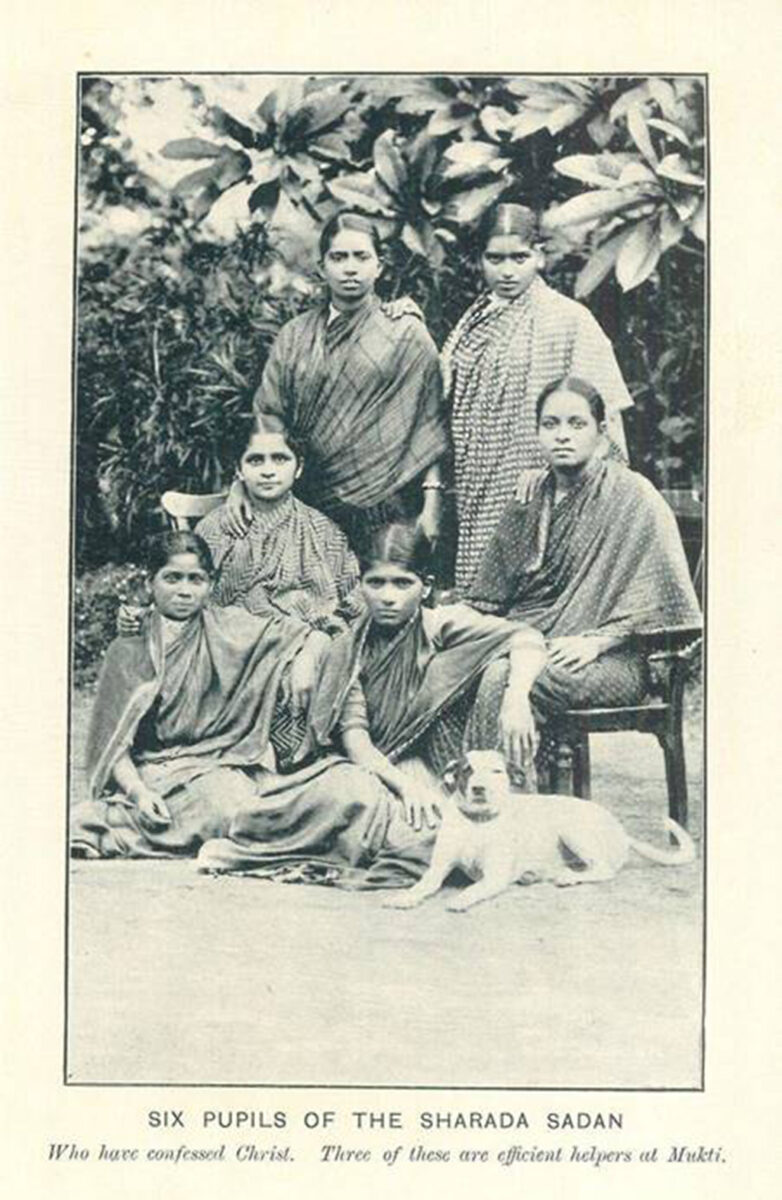
In 1889, Pandita Ramabai founded Sharada Sadan in Pune, an institution built on a premise that was radical for its time: education for women that should not stop at literacy only. Ramabai herself also had an unconventional educational background for her time; she was literate in Sanskrit, taught by her father, an orthodox Hindu scholar. Sarada Sadan was a residential school dedicated to the education and rehabilitation of child widows; alongside reading and writing, Sharada Sadan taught printing, carpentry, agriculture, and other vocational skills, treating academic and practical instruction as inseparable. Ramabai measured her institutions by a realistic metric which was concrete; by 1900, eighty women who had passed through Sharada Sadan were able to earn their own living. The performance of the institution was not merely measured by enrolment but by the outcomes it produced (Kasumbi, n.d.).
Accessibility as Precondition, Not Destination
Accessibility is the precondition, not the finish line. Ramabai understood this distinction well: Sharada Sadan admitted women systematically excluded from formal education, and getting them through the door mattered. But she did not stop at admission. Her real standard was what came after: literacy, vocational competence, and more crucially the ability to earn a living independently. This distinction matters enormously for how we read Indian education today. The country has made genuine, measurable progress on accessibility, and thus enrolment has expanded but that not the end goal. Accessibility was always meant to be step one. Ramabai emphasizes on the second step: after a child is inside the system, does it produce someone who can read, calculate, and eventually stand on their own? That is where the real work the is needed and remains unfinished.
The Evidence: Foundational Learning Data
The data brings this out with uncomfortable clarity. In 2018, 20.9% of Class 3 students in rural India could read a Class 2-level text. That figure fell to 16.3% in 2022, and has since recovered to 23.4% in 2024, according to the Annual Status of Education Report (ASER), India's most comprehensive rural learning survey (ASER Centre, 2023, 2025; Rural India Online, 2024). We should pay attention to this trajectory carefully because over a full decade, the proportion of eight-year-olds who can read at even a basic level has moved within a narrow band of roughly 16-23%. The 2024 figure, celebrated as a post-pandemic recovery, is essentially a return to a mediocre 2018 baseline, not evidence of a system improving over time (Ideas for India, 2025). Arithmetic tells a similar story: the share of Class 3 students able to do basic subtraction rose from 25.4% in 2014 to 28.2% in 2018, fell to 25.9% in 2022, and has since climbed to 33.7% in 2024 (ASER Centre, 2025). A decade of policy attention, budget allocation, and reform language has produced movement within a band, not sustained growth beyond it. This is stagnation dressed with better packaging.
Enrolment Success, Learning Shortfall
Set this against enrolment data, and Ramabai's distinction becomes unavoidable. Government school enrolment among children aged 6-14 stood at 65.6% in 2018, rose to 72.9% in 2022, and settled at 66.8% in 2024 a system that has, at scale, succeeded in getting children through the door (ASER Centre, 2025; Rural India Online, 2024). Rural teenage enrolments are stronger still, with 86.8% of 14-18-year-olds now in some form of education. On accessibility, the numbers are genuinely respectable. But among that same older cohort, nearly 43% struggle to read a simple English sentence, and roughly a quarter cannot read a Class 2-level text in their own regional language (Careers360, 2024). These are not children who lack access. These are children within the system for a decade or more without proper guidance and formal trainings to support self-sustenance.
Closing the Gap: Lessons from Both Models
This is precisely the gap her model was built to close. Sharada Sadan did not treat literacy and livelihood as separate tracks to be addressed sequentially, or hoped for as a byproduct of years of attendance it integrated them from the start, and measured itself by whether that integration actually worked. India's public education discourse, by contrast, spends disproportionate energy on textbook content disputes and enrolment targets, while foundational learning the one metric Ramabai would have insisted on checking first remains largely unmoved. Nagi's model, a century later, quietly makes the same correction: her learning centres are judged by whether children read, count, and stay in education, not by whether a ministry counts them as enrolled (World Governments Summit, 2026). Both the women arrived at outcome-based design from outside the formal state system, working in the margins rather than in a ministry, is itself a finding worth sitting with.
The Next Frontier: From Access to Readiness
None of this argues for abandoning access as a goal, Ramabai never did, and neither should Indian policy. It argues for refusing to let access stand in for success. This gap is now repeating itself at a new frontier. Urban classrooms are quietly dissolving into digital and hybrid learning, while rural India is still working to produce students who are foundationally literate enough to make that same transition, meaning the next divide will not be access to devices, but readiness to use them. A sustainable education ecosystem, in Ramabai's own working definition, is one that treats enrolments and now digital access as a starting condition, and measures itself, relentlessly, on what students can actually do afterward: read, calculate, and eventually support themselves. Indian education policy has the enrolments infrastructure Ramabai never had access to.
Conclusion: Holding the System to a Higher Standard
What it still lacks is her discipline of measurement a willingness to treat stagnant foundational learning as the central crisis, rather than a footnote to enrolments or digital-access success stories. Sharada Sadan and Nagi's living walls both suggest what that discipline looks like in practice. The public system does not need to reinvent this model. It needs to hold itself to the standard both women already set now, before the digital divide hardens into a permanent one.
