


Have you ever left a conversation with a tiny knot in your stomach, wondering why it didn't sit right with you? Maybe someone made a comment that felt a little off, or you couldn't help noticing that you were being treated differently from everyone else. And when you tried to explain what bothered you, you couldn't quite find the words.
Discrimination doesn't always come waving a giant red flag. Sometimes it hits you right where it hurts, and other times, it's tucked into small comments and subtle behaviors. Understanding the difference between overt and covert discrimination can help you spot these behaviors, make sense of your experiences, and figure out what to do next.
What Is Overt Discrimination?
Imagine applying for a promotion, only for your manager to tell you that the role would be a better fit for a man. You don't have to spend hours wondering what they meant. The assumption about your gender is right there in the conversation.
That's overt discrimination: unfair treatment based on a characteristic such as race, gender, religion, or disability, expressed in a direct and recognizable way.
It can happen in everyday life, too. Maybe someone makes a racist remark while you're out with friends, or a person openly refuses to associate with someone because of their religious beliefs. These are examples of overt discrimination and racism, where the prejudice isn't particularly hidden.
However, being able to identify discrimination doesn't automatically make it easier to deal with. Speaking up can feel risky when there's a power imbalance or when you're unsure how the situation might escalate. Overt discrimination can still leave you in a difficult position, even when you know it's wrong.
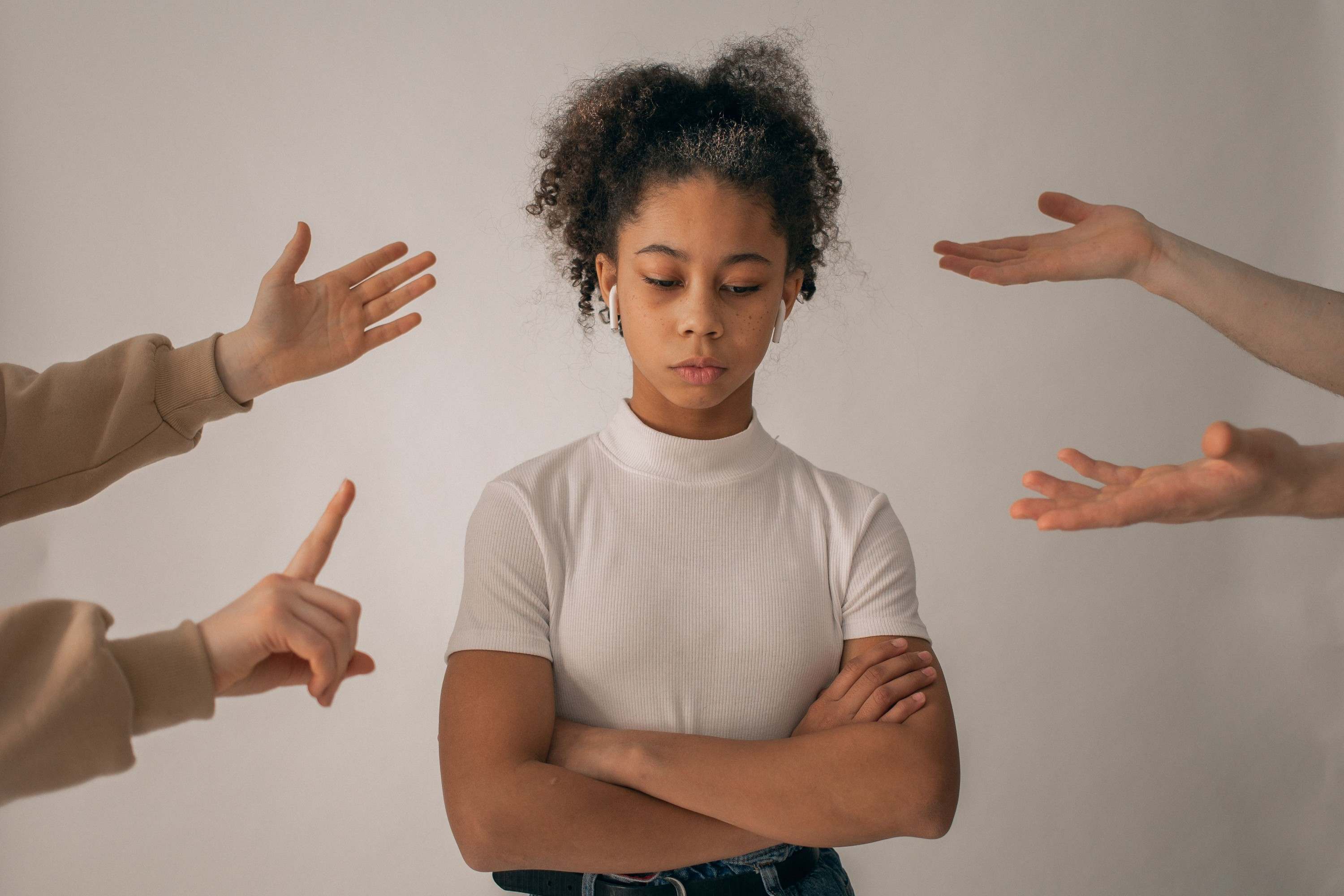
Image credits: Pixels
Alt text: People pointing and scolding at a discontent black woman.
What Is Covert Discrimination?
Covert discrimination is trickier because it doesn't always come out in a mean way. Instead of an openly offensive remark, it might show up in small interactions, repeated decisions, or subtle differences in how people are treated.
Picture this: you pitch an idea during a strategy meeting, but nobody really acknowledges you and moves on to the next topic. A few minutes later, someone else suggests practically the same thing, and suddenly everyone is interested. If it happens once, maybe it's just an awkward moment. But when it keeps happening, especially to the same person or group of people, it's harder to brush off.
Covert racism and subtle bias can also be built into the way decisions are made. For example, a company might rely on an informal hiring process that repeatedly favors candidates from the same backgrounds. Nobody needs to say anything openly prejudiced for that process to disadvantage others.
The most important thing is discrimination doesn't have to be intentional to have an impact. Someone doesn't necessarily have to intend harm to treat another person unfairly. And while not every uncomfortable interaction points to discrimination, how that behavior affects someone still matters.
Overt vs. Covert Discrimination: What's the Difference?
The easiest way to think about it is that overt discrimination tends to be more visible, while covert discrimination can take a little more digging to recognize.
Overt discrimination | Covert discrimination |
Direct comments or actions | Subtle behavior or repeated patterns |
Bias may be openly expressed | Bias may be concealed or unrecognized |
Can be easier to identify immediately | May require looking at context over time |
May involve deliberate unfair treatment | Can be deliberate or unintentional |
Discrimination can also extend beyond individual interactions. Workplace rules or established practices may disadvantage particular groups, even when those rules appear neutral on the surface. Looking at these broader patterns can help reveal forms of systemic discrimination that might otherwise go unnoticed.
How to Recognize Discrimination in Everyday Life
So how do you tell the difference between a genuinely unfair situation and a misunderstanding? There's no checklist that will give you a definite answer every time, but there are a few things worth noticing.
Start with patterns. Do certain people receive harsher feedback or have their mistakes scrutinized more closely than everyone else's? Or maybe a remark about someone's appearance, background, or abilities might be framed as a joke or even a compliment, but still rely on a harmful stereotype. These everyday interactions can fall under the umbrella of microaggressions.
Context matters just as much. Look at the circumstances, whether similar incidents keep happening, and whether people in comparable situations are treated differently. You don't have to dismiss your feelings just because you can't immediately explain what's wrong. Take a step back, consider what you've observed, and give yourself room to work out what might be happening.
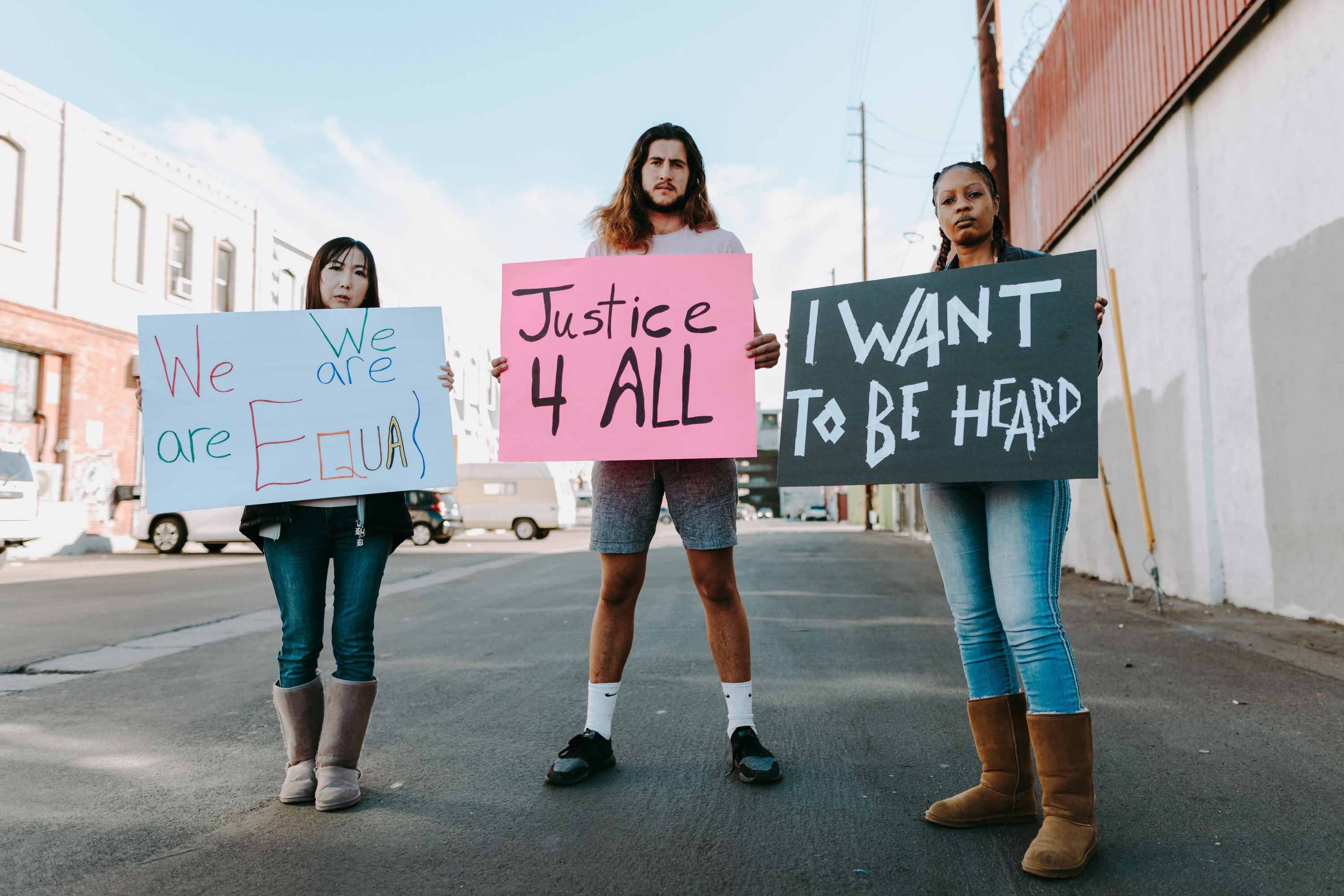
Image credits: Pexels
Alt text: A diverse group of protesters holding signs for equality and justice during a daytime rally.
How to Tackle Overt and Covert Discrimination
Recognizing discrimination is one thing. Figuring out what to do next can feel way more complicated, especially when you're dealing with someone you work with or see regularly. These steps can help you decide how to move forward.
1. Speak Up If You Feel Safe Doing So
If someone makes an inappropriate comment, you can address it without turning the moment into a full-blown confrontation. Sometimes asking "Sorry, what do you mean by that?" is enough to make someone reconsider their words.
You could also explain why a remark wasn't appropriate or calmly state that you're uncomfortable with the way you're being treated. But you don't owe anyone a confrontation, especially if speaking up could put you at risk. Your safety comes first, and choosing another way to address the situation is just as valid.
2. Keep Track of What Happens
It's easy to have a “Whatever, I’ll just ignore it” moment and move on with your day. But when you keep finding yourself in the same situation, keeping a record can help you connect the dots especially when it comes to covert discrimination.
Write down what happened, when it happened, and who was present. Save relevant messages or emails where appropriate.
3. Find Someone You Can Talk To
You don't have to figure everything out on your own. A trusted colleague, manager, HR representative, or employee support organization may help you understand your options and decide what to do next.
If the behavior is serious or keeps happening, you may want to explore formal reporting channels. The EEOC's guidance on workplace discrimination explains options for people experiencing discrimination in the United States. The right process and available protections will depend on where you live and work.
4. Look Beyond the Individual Incident
If you're a manager or someone responsible for workplace culture, tackling discrimination means looking at more than individual comments. Ask whether hiring decisions are fair, promotion criteria are consistent, and employees have equal access to feedback and development opportunities.
Choosing Kindness in a World That Needs More of It
There's a reason the idea of killing them with kindness has stuck around. Kindness can soften difficult conversations and remind people that differences don't have to divide us. But its value goes beyond how we handle individual disagreements. It's also about creating a culture where empathy comes more naturally than judgment and respect isn't reserved only for people who are like us.
Creating that kind of environment takes all of us. It means being thoughtful about our words, being open to perspectives that challenge our own, and being willing to learn when we get things wrong. We may not be able to change everyone's attitudes overnight, but we can contribute to a culture where people feel respected and differences are embraced.
There's a reason the idea of killing them with kindness has stuck around. Kindness can soften difficult conversations and remind us that differences don't have to divide us; It's also about creating a culture where empathy comes more naturally than judgment and respect isn't reserved only for people who are like us.
Creating that kind of environment takes all of us. It means being thoughtful about our words, staying open to perspectives that challenge our own, and being willing to learn when we get things wrong. There’s also a need to recognize that kindness needs to go hand in hand with accountability. We may not be able to change everyone's attitudes overnight, but we can help create a culture where people feel respected and differences are embraced.
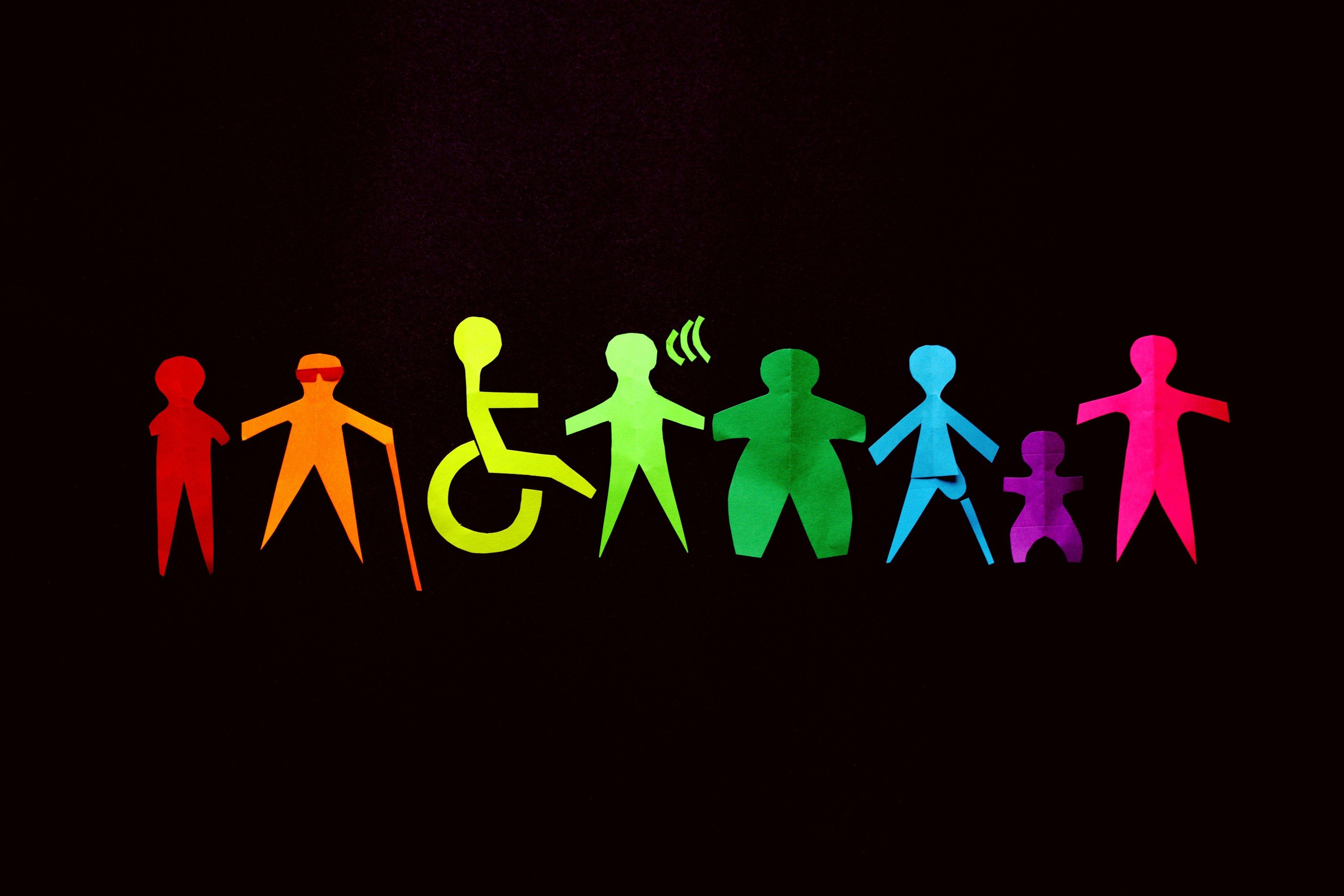
Image credits: Pexels
Alt text: A diverse group representing disability inclusion, body diversity, tolerance, and acceptance.
Conclusion
Discrimination isn't always easy to recognize. What matters is learning to notice patterns, taking concerns seriously, and knowing where to turn for support. The more we understand how discrimination works, the better equipped we are to challenge it and help create spaces where everyone has a fair chance to belong and thrive.
