


Can Women Work on Oil Rigs? Career Paths for Women in Energy
Are women able to work on oil rigs? Indeed, they do, sometimes as the sole female on the platform. The larger image is quieter, though. According to the International Energy Agency's 2025 World Energy Employment report, women make up about half of the global economy and one in five energy-related jobs. This disparity seems to be the reason why discussions about women in the energy industry still seem to be in their early stages. It also explains why the doors that are currently opening merit just as much attention as those that are still stuck.
This guide examines both, using examples from India, and concludes with some useful suggestions for creating your own itinerary and also debunks some myths about the oil and gas industry.
H2. Can Women Work on Oil Rigs? Here Is What It Looks Like
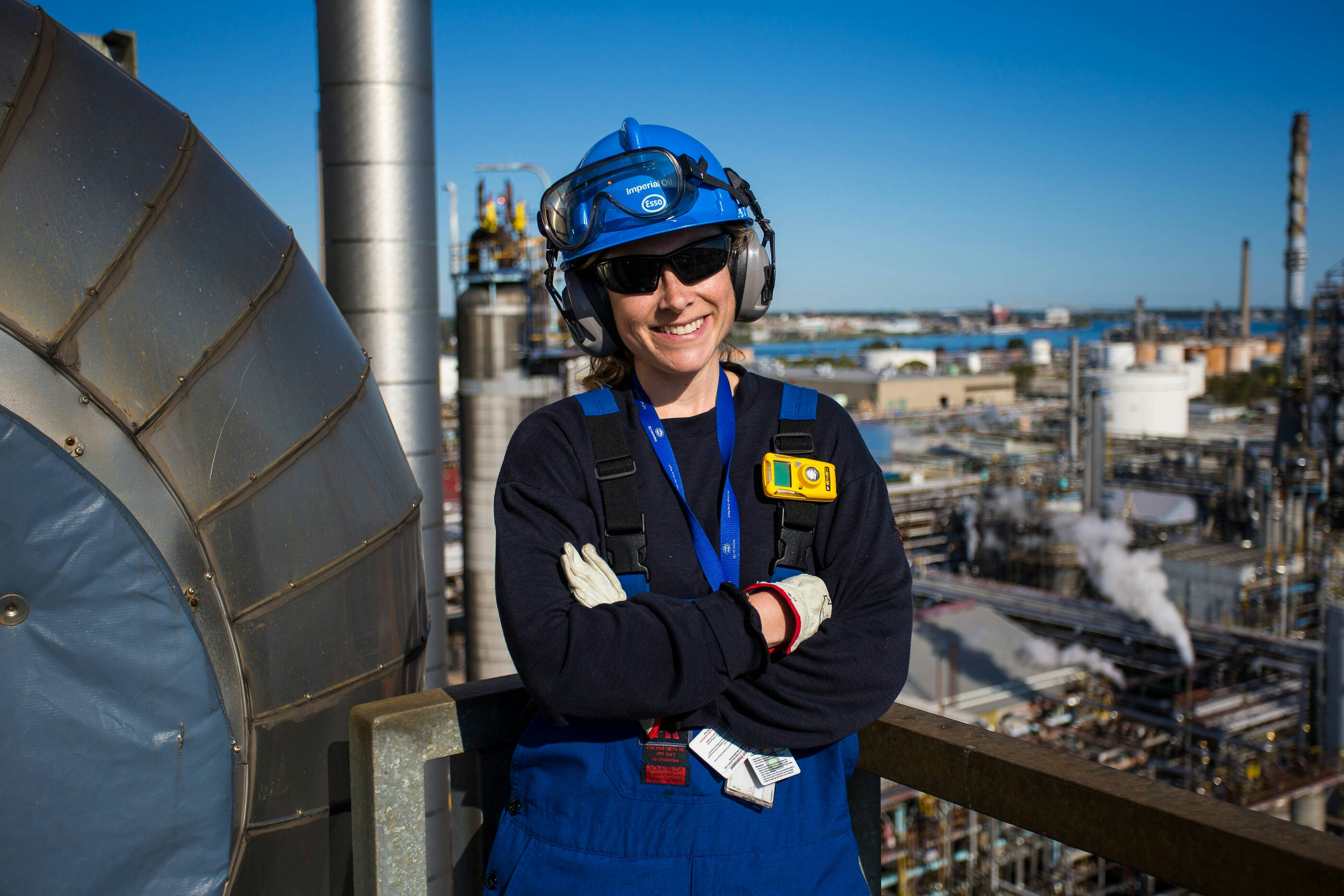
In India, women are already employed in offshore facilities. News suggests nine women were among the approximately 4,500 workers of one of the nation's state-run oil and gas companies that kept its offshore Arabian Sea and Bay of Bengal fields operational during the 2020 lockdown.
Nine is not a big number. Additionally, there are nine operational precedents.
Growing up in Shimla, lead field engineer Niharika Sharma was the only woman on the deepwater rig when she introduced a cutting-edge logging tool to an Indian operator. She spent her first time offshore on a helicopter flight, and the operator had made the rig's facilities welcoming to women, something that most rigs can't say, according to a profile of her work.
The global picture looks similar. Women working offshore are often medics, safety advisors, or facility managers rather than engineers, and most engineering happens onshore. That seems to suggest the rig is one entrance into energy among several.
H2. Beyond the Rig: Where Women Build Energy Careers
Energy careers stretch well beyond the drill floor. Some run through the field, others through finance, law, and leadership, and the routes between them seem more connected than they first look.
H3. Technical and Field Roles
Upstream work covers drilling, production, reservoir and geoscience roles, along with the field engineers and safety specialists who keep operations steady. Onshore offices, refineries and control rooms usually offer technical careers on a more predictable schedule than a platform posting, and many paths appear to combine both, with a stretch in the field early on and desk or plant work later.
H3. Business, Finance and Leadership Roles
Working in the oil industry does not always involve a hard hat. Finance, law, HR, procurement and data analysis all sit inside energy companies, and several of India's best-known leadership stories run through those functions.
Alka Mittal holds a postgraduate degree in economics and an MBA in human resource management. She joined her company as a graduate trainee, became the first woman on its board as a full-time director, and later took charge as the first woman to head one of India's biggest exploration and production companies. Nishi Vasudeva had already become India's first woman executive to lead an oil company.
Career switchers appear to have a route in as well. One industry survey found that a large share of women had moved into oil and gas from fields such as construction, law and retail.
H2. Opportunities Worth Watching
Change in this industry tends to arrive quietly. A few signals, from leadership tables to labour rules to neighbouring energy sectors, suggest the ground is shifting in ways worth noticing.
H3. Leadership Is Moving Unevenly
Recent IEA analysis found women's share of senior energy leadership climbing faster than the economy-wide average, although oil and gas has moved more slowly than renewables and nuclear. One might argue that this uneven pace is a starting position rather than a verdict.
H3. Policy Is Shifting
India's rulebook has been changing too. In 2019, the labour ministry notified rules letting women work below ground in mines in technical, supervisory and managerial roles and take night shifts in above-ground workings, after consulting several ministries, Petroleum and Natural Gas among them. Written consent, group deployment, and standard operating procedures were built in as safeguards.
The notification concerns mines rather than rigs, but the direction of travel appears clear enough.
H3. Skills Travel Across Energy Sources
Energy is wider than oil. Renewables employ a larger share of women than oil and gas does, according to figures cited by Offshore Technology, and a geologist, engineer or analyst may find adjacent work there without starting from zero.
H2. Some Common Challenges
Progress looks better beside an honest view of what still slows it down. The hurdles below are mostly practical, which may be why so many of them can be planned for.
H3. Visibility and Recognition
The IEA links the slow overall change partly to job growth in trades such as welding, electrical, and line work, where women remain scarce. In that same industry survey, most women felt welcome in the field, and a large majority would encourage others to join, yet many believed men receive more recognition. Both findings can sit side by side.
Offshore Energies UK has projected that, even with equal recruitment from here on, balance in the UK North Sea could take decades.
H2. Kit, Facilities and Rotations
Protective equipment is a practical hurdle that rarely makes headlines. A survey by the UK Women's Engineering Society found that women are far less likely than men to describe their gear as comfortable, and that it is often too big. Baker Hughes' profile of Sharma adds that most rigs lack dedicated washrooms for women.
Rotations matter too. Usually offshore staff work two weeks offshore before an equal break at home, a pattern that some families may find easier to plan around than a daily commute and others harder. The IEA's survey of education providers found that limited flexible work and childcare support were the challenges cited most often by women in the energy workforce.
Ask about all of it before accepting a posting.
H2. Pick a Discipline and a Starting Point
Engineering, geology, chemistry, economics, law and data all feed energy careers. Large public sector recruiters such as ONGC run graduate trainee drives, the route Mittal took, and early field exposure may be worth seeking even if it lasts only a short while.
H3. Ask the Right Questions Early
Interviews run both ways. Ask about facilities, rotation patterns, parental leave, and how the team has supported the women who came before you. A good employer will have specific answers, and vague ones may tell you something too.
H3. Apply Before You Feel Ready
Women often wait to meet every listed requirement, while men tend to apply after matching a couple. It is best to apply anyway, showcase transferable skills, and reach out on LinkedIn.
H3. Build Your Circle
The industry needs stronger mentorship and more equal recognition, so seeking mentors early, inside the company and beyond it, seems sensible.
H2. Conclusion
Energy needs engineers, geologists, analysts, and leaders, and the women filling those roles are already changing what a rig crew or a boardroom looks like. For anyone weighing careers in oil and gas, a first step might be a conversation with a woman already working in the field. She will probably have a story about her first helicopter ride.
